
Economy air, consolidated service and sea-air give shippers more ways to buy time. The decision starts with how much freight actually needs to arrive early.
A late purchase order can turn an entire ocean shipment into an airfreight quote. Before approving it, ask how many units actually have to arrive early to keep a production line running, fill committed orders or protect a launch. That quantity may be far smaller than the purchase order. The balance may still have time to move by ocean.
That is where air cargo is becoming more useful to cost-conscious shippers. Providers offer slower air services, consolidated departures and routes that combine ocean, air or truck. Each gives the shipper something to trade for a lower quote: a wider delivery window, more routing flexibility or fewer units on the aircraft. Availability and savings depend on the lane, cargo and contract.
The market backdrop makes those choices matter. In its September report, IATA measured global air cargo traffic growth of 7.7% from a year earlier against capacity growth of 2.7%. Jet fuel prices more than doubled over the same comparison period. Those figures describe the market in September. The price and space available for a November shipment still need to be confirmed at booking. IATA September market analysis
Who is competing, and how
Maersk. Priority, Premium and Economy Air, plus Sea-Air through hubs including Singapore, Dubai and Los Angeles. Its published Economy Air window is 5–7 days airport to airport. Quote the same shipment by economy air and sea-air. Get the actual transfer point, connection and final delivery date. Maersk Air Freight
DHL Global Forwarding. Air Economy uses routing and carrier selection to balance cost and transit. DHL lists 5–7 days as typical. Ask which routing supports the quote, when freight must be tendered and whether the transit estimate covers your delivery address. DHL Standard Air Freight
UPS Supply Chain Solutions. Air Freight Consolidated adds a slower tier alongside Air Freight Direct. UPS also lists expedited ground and contract cross-border ground options on eligible lanes. For a road-accessible lane, quote consolidated air and expedited ground to the same receiving appointment. UPS Air Freight
FedEx. International Priority, Economy and Deferred Freight give eligible shippers different service levels. FedEx also completed an airside facility modernization in Madrid in November to expand handling capacity and improve connections. Ask which service tiers your lane and shipment qualify for, and compare fuel, minimum charges and handling on each quote. The Madrid investment establishes added handling capability. Customer savings would need to show up in a quote. FedEx service guide · Madrid facility update
American Airlines Cargo. Published widebody, cargo and trucking schedules give forwarders additional airport and feeder combinations to evaluate. Its schedule page also flags Thanksgiving station hours and trucking changes. Confirm package dimensions, available space, the feeder cutoff and destination recovery hours before committing a holiday-week delivery. American Airlines Cargo schedules
Where the savings come from
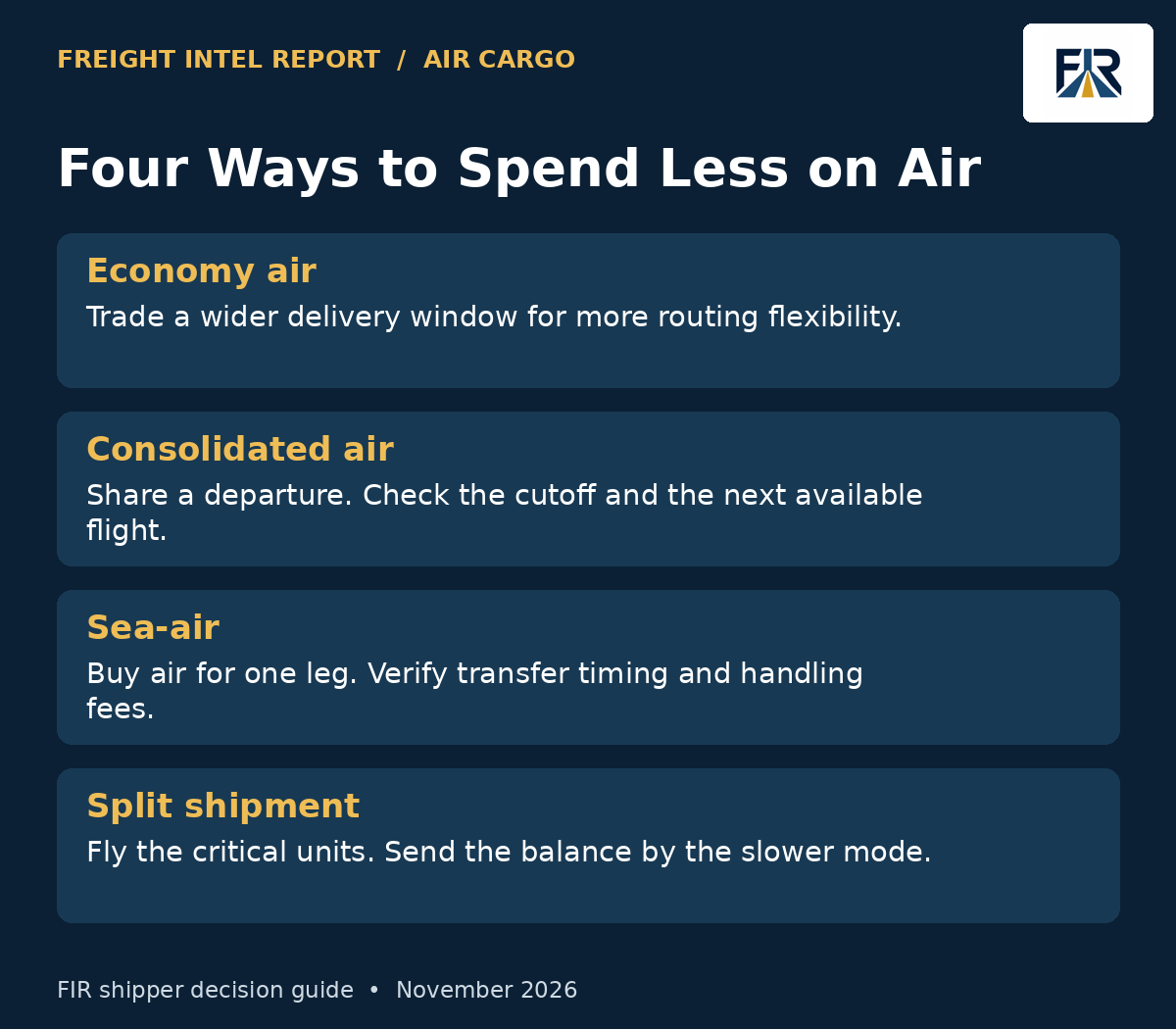
Buy a wider delivery window. Economy or deferred air gives a provider more room to choose a departure, route or consolidation. Ask how often the consolidation closes and when cargo will actually leave. A shipment that misses the close can spend its entire buffer on the ground.
Fly a shorter portion of the journey. On an eligible sea-air lane, the ocean leg can reduce the amount of transportation bought at air rates. The transfer introduces another cutoff and handling point. Ask who owns the connection, what happens if the vessel is late and whether the quote includes the transfer and final delivery.
Fly fewer units. For a stockout, identify how many units are needed to cover confirmed demand until slower replenishment arrives. For a production interruption, identify the specific parts that restore output. Quote that quantity by air, and price the balance separately by ocean, truck or rail where feasible. Check the additional handling and documentation that come with splitting the order.
Check what you’ll be charged for. Provide packed dimensions, gross weight, piece count and stackability before requesting rates. Ask for the billable weight and any minimum or handling charge. Compare quotes with identical pickup, screening, customs clearance and delivery scope. A low airport-to-airport rate can become the higher delivered quote after those items are added.
Choose the mode by the delivery commitment
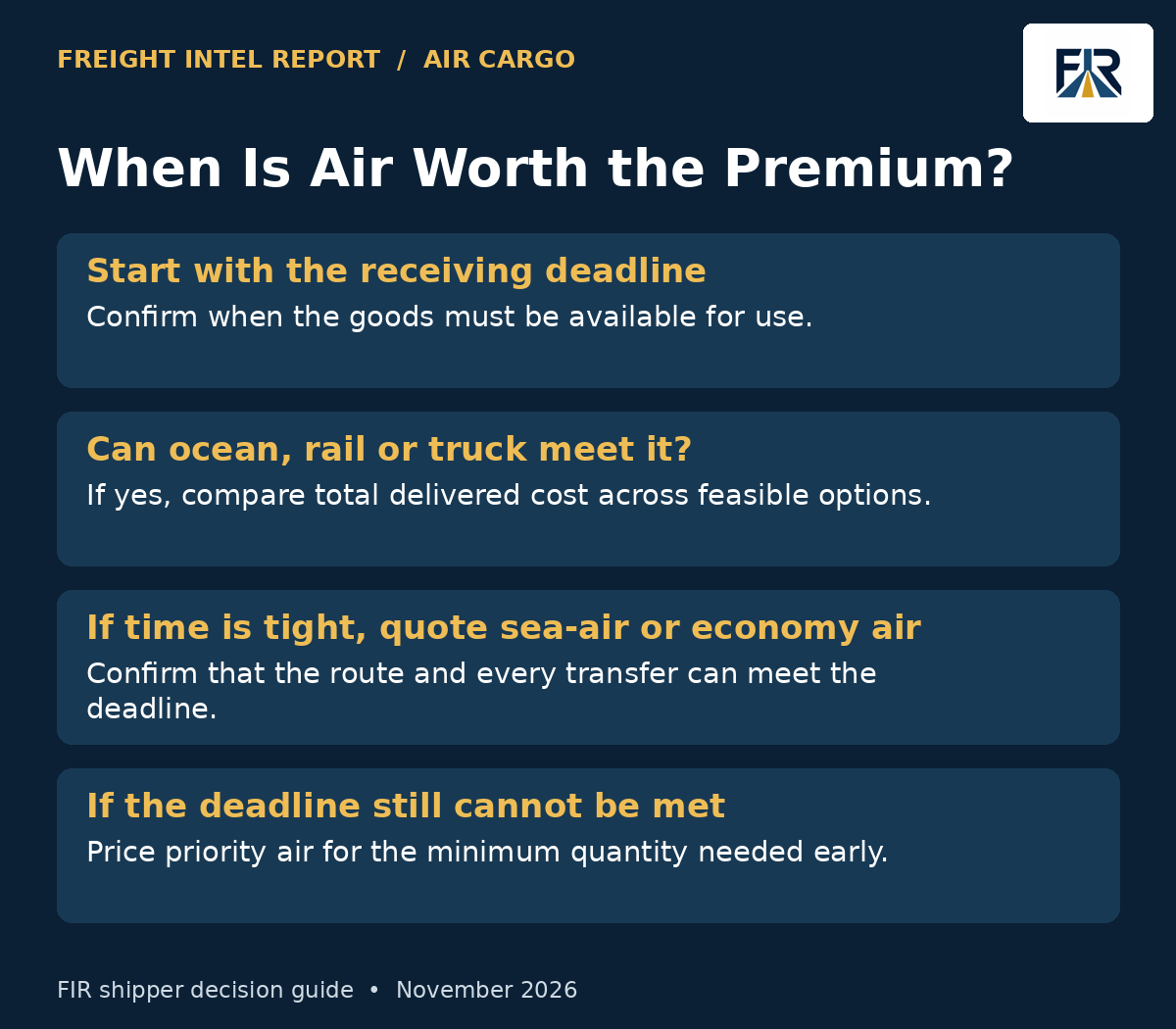
Use ocean or rail for planned replenishment when inventory covers the longer pipeline. Compare expedited truck first on a road-accessible lane when a direct pickup and delivery can meet the appointment. Airport tender, screening, recovery and final delivery can consume the time an aircraft saves in transit.
Quote sea-air or economy air when ordinary ocean misses the deadline and there is still enough time to absorb a transfer or consolidation. Quote priority air when a credible slower option misses a consequential deadline. For a plant shutdown, a critical repair or a committed launch, work backward from the time the goods must be usable and confirm that each handoff fits. Consider charter selectively when scheduled service cannot handle the shipment’s dimensions, acceptance requirements or deadline.
What to do before approving the move
A shipper should compare the incremental delivered cost of the faster option with the avoidable cost of arriving late. Include only costs the earlier delivery can realistically prevent, such as lost contribution on orders that would otherwise go unfilled or production downtime the shipment can avert. Use a range when the exposure is uncertain. An earlier arrival has little value if customs clearance, warehouse hours or a missing component still prevents the goods from being used.
Brokers and forwarders should give the customer two comparable options whenever the lane allows. Show the slower routing and the fastest practical recovery, with the same receiving deadline, itemized charges and a named party responsible for each handoff. Confirm space and cargo acceptance before presenting a flight schedule as a delivery commitment. If space or connections are still pending, keep the surface plan available and agree on the cutoff for switching modes.
We will continue to follow this story as it develops. FIR will update this article when verified changes in service or capacity give shippers a different option on a specific lane. Subscribe to FIR for updates.
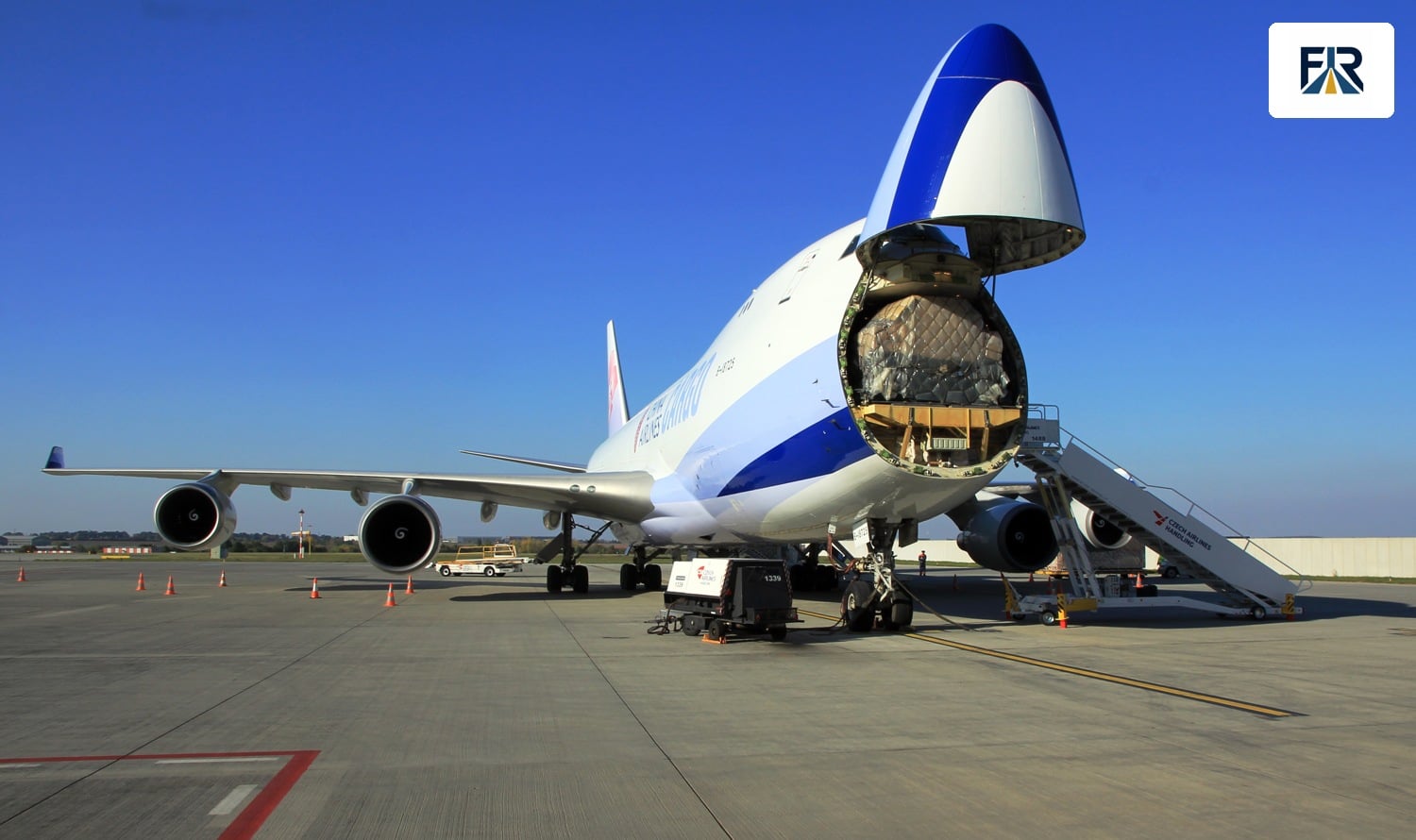
CC BY-SA 3.0 applies to the branded photograph.


Leave a Reply