
Know whether the load works before anyone tenders it.
Test shipper value, broker margin resilience, carrier economics and execution confidence in one risk-adjusted decision. See who is absorbing operating friction—and what must change.
FIR Load Alignment Engine™ and FIR Alignment Score™ are trademarks of Freight Intel Report. Planning and educational use only.
Top Stories
The developments with the clearest operational, financial and strategic consequences.
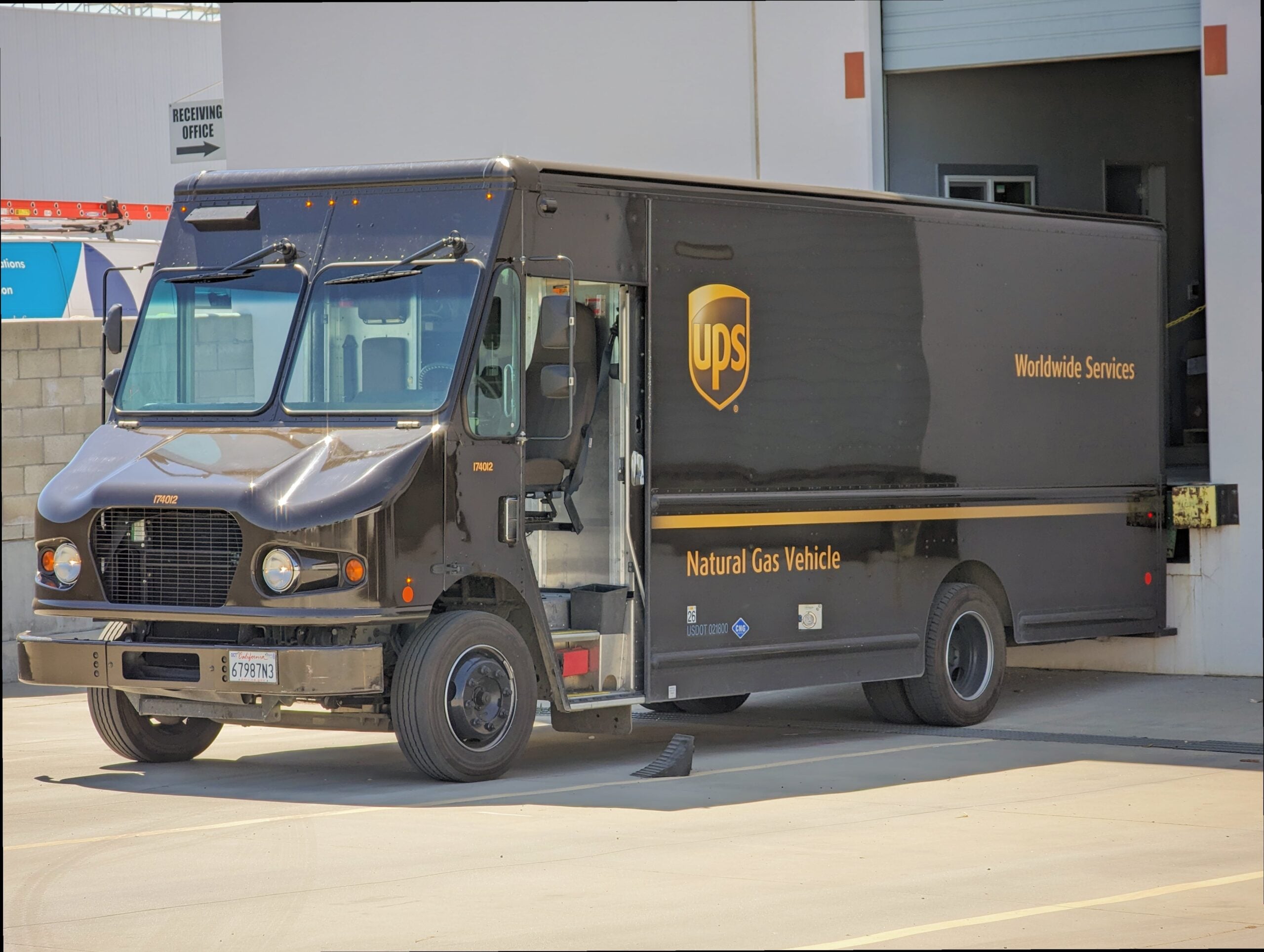
UPS’s 2027 Rate Reset Starts Before Christmas—Why Shippers Need More Than a 5.9% Budget Increase
UPS’s rate reset begins before Christmas. FIR explains how shippers can test weight, zones, fuel, fees and workflow changes before finalizing budgets.
Read analysis →
Typhoon Champi Is Disrupting Asia Freight—Which Shipments Should Shippers Expedite, Reroute or Hold?
Champi’s freight disruption tests more than port reopening. FIR explains how shippers can prioritize orders, compare complete recovery options and control expedite spending.
Read analysis →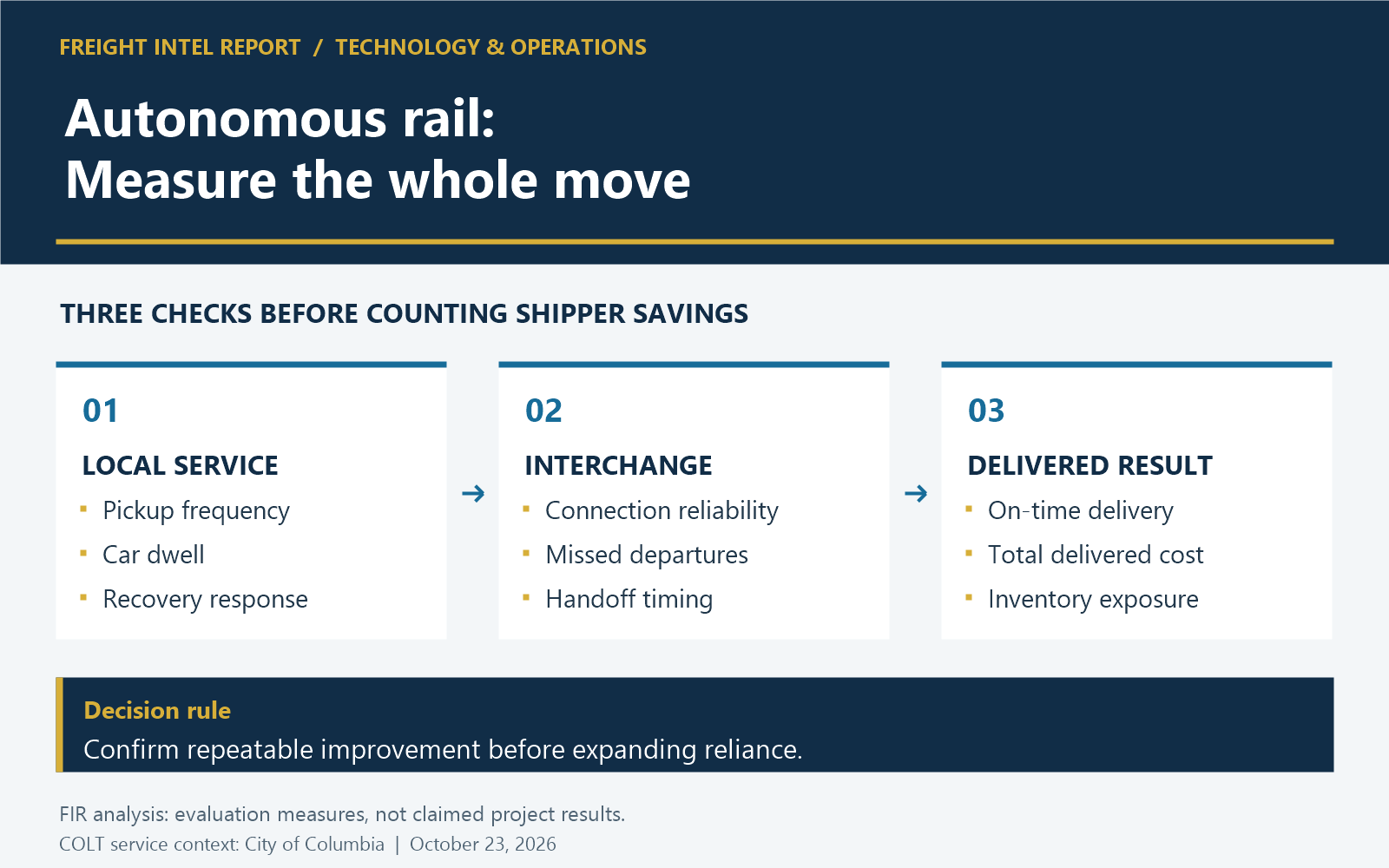
Missouri’s Autonomous Rail Project Puts Freight Service Frequency to the Test
FRA selected Columbia for up to $16.207 million to modernize COLT and test autonomous rail service. FIR examines frequency, costs, reliability and shipper decisions.
Read analysis →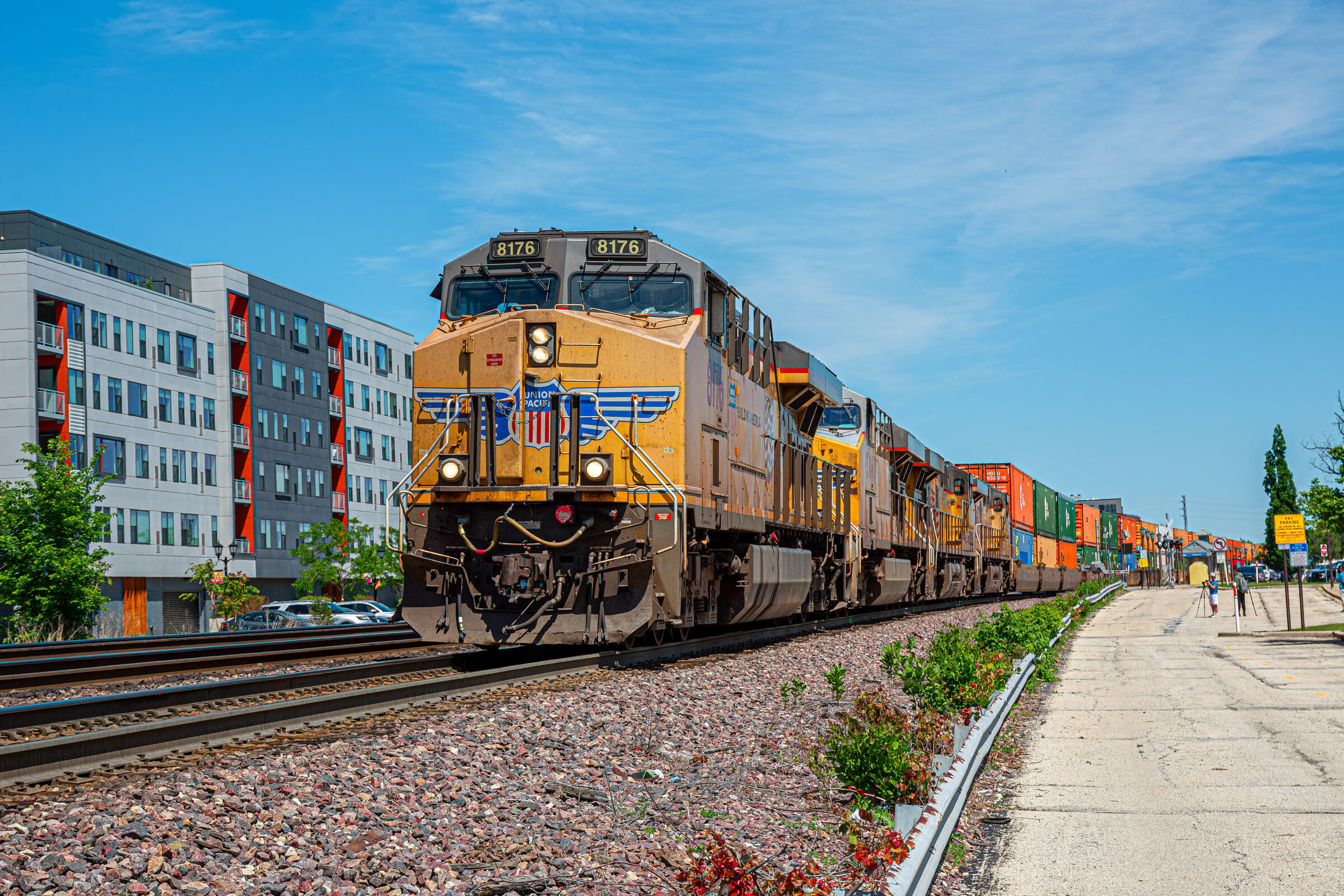
Rail Revenue Is Rising Faster Than Freight Volume—What Shippers Should Challenge Before Signing 2027 Rates
Today’s Union Pacific and Norfolk Southern results separate revenue growth from shipment growth. What shippers should demand on price, service and capacity before signing 2027 rail contracts.
Read analysis →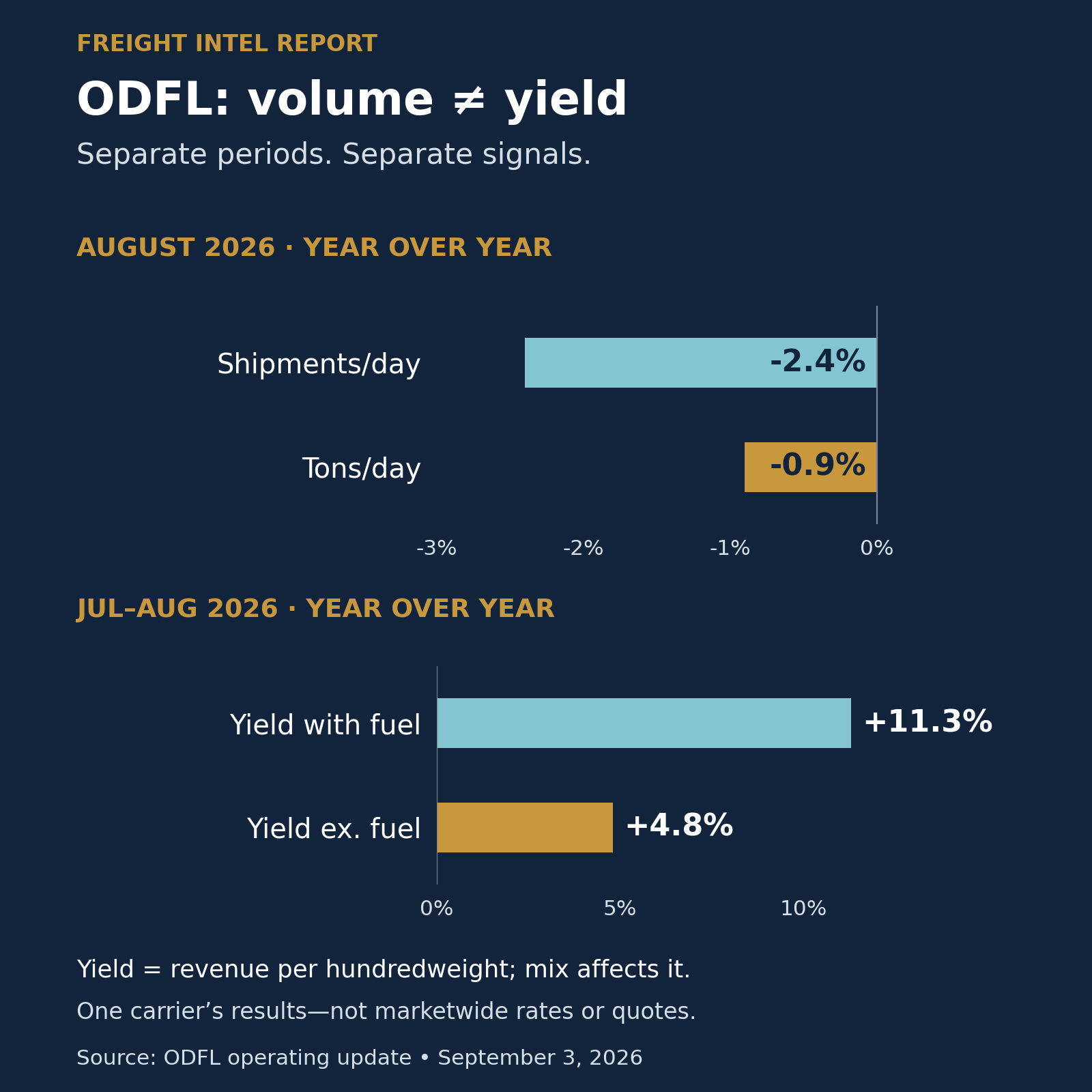
Old Dominion’s October 5 Rate Increase: Reprice Your Shipments, Not Just Your Budget
Old Dominion’s announced 4.9% increase is not every shipper’s bill. Audit tariff exposure, minimum charges, fuel and lane costs before October 5.
Read analysis →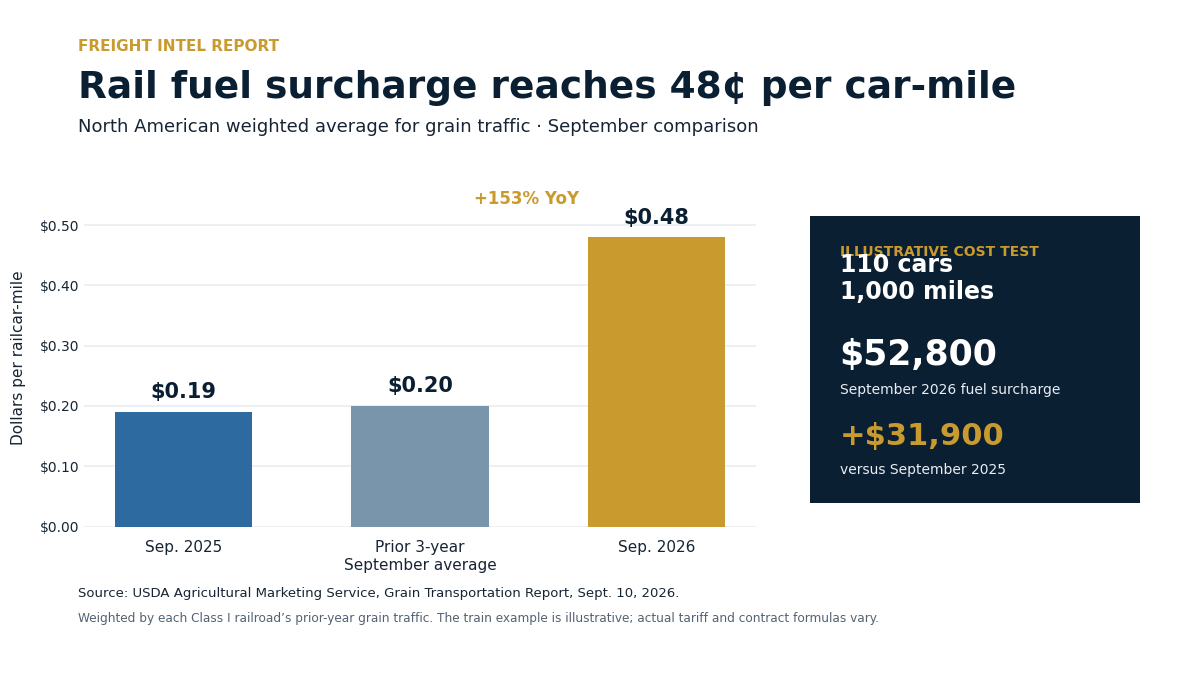
Rail Fuel Surcharges Hit 48 Cents a Car-Mile as Harvest Backlogs Build—What Grain Shippers Should Audit Now
Rail grain fuel surcharges reached $0.48 per car-mile as North Dakota backlogs topped 1,100 orders. What shippers should audit before tender.
Read analysis →Understand the Entire Freight Network
Independent intelligence across rail, intermodal, maritime, ports, drayage, trucking, freight markets, regulation, infrastructure and technology—for the people making consequential transportation and supply-chain decisions.
More intelligence
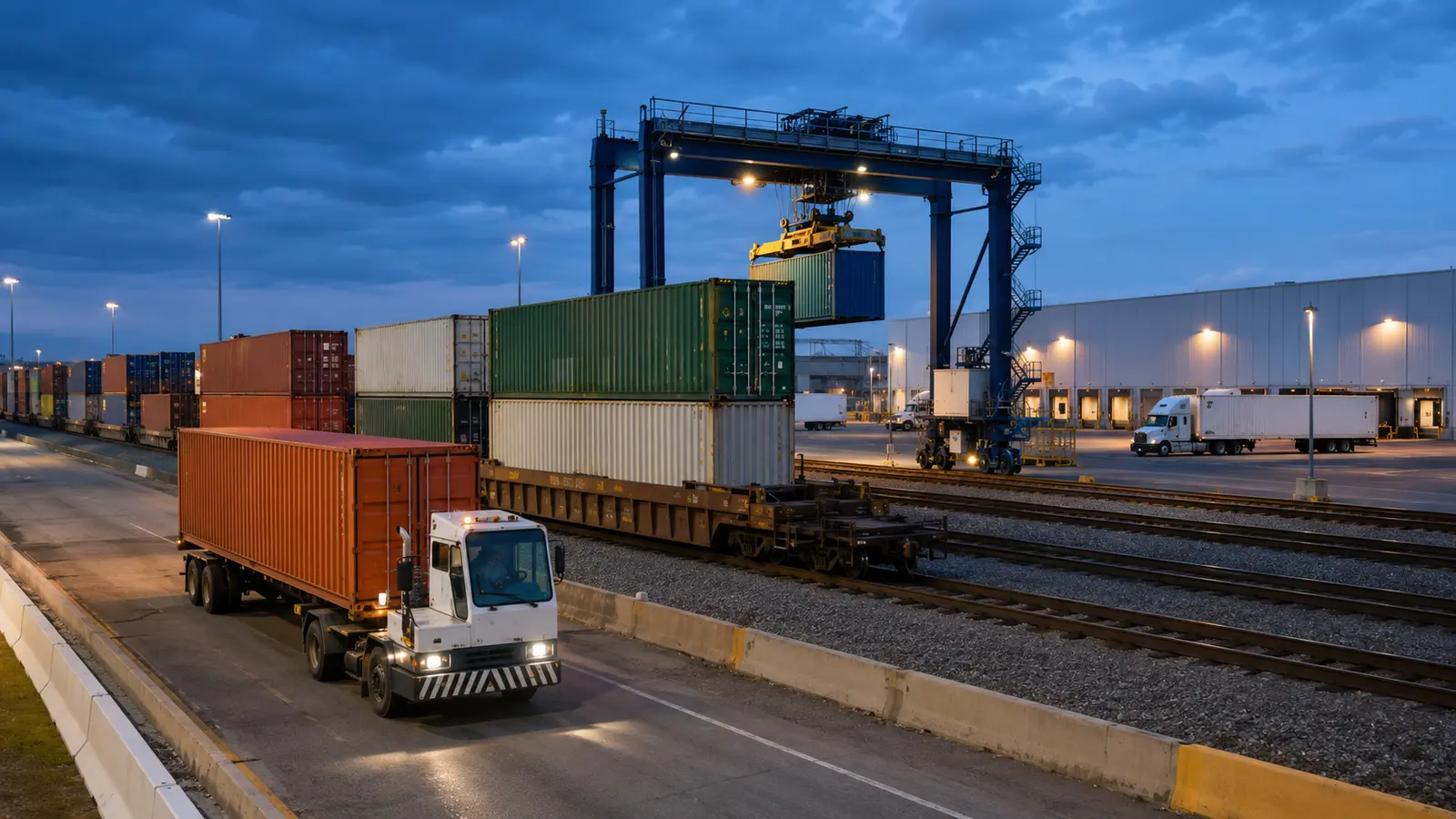
Seven signals. One connected system.
We connect demand, capacity, cost, regulation, trade, technology and risk across transportation modes so industry decision-makers can see consequences before they become obvious.
Multimodal intelligence, connected by consequences
Explore the modes that move freight and the forces that reshape decisions across the network.
Rail & Intermodal
Railroad strategy, service, pricing, terminals, intermodal capacity and network performance.
Explore coverage →02Maritime, Ports & Drayage
Ocean markets, port operations, container flows, trade lanes and first- and last-mile consequences.
Explore coverage →03Trucking & OTR
Rates, capacity, carriers, brokers, safety and the operating economics of highway freight.
Explore coverage →04Markets & Shipper Strategy
Demand, cost, procurement, inventory, routing and the signals shaping transportation decisions.
Explore coverage →05Regulation, Infrastructure & Risk
Policy, investment, compliance, fraud, safety and systemic exposure across the freight chain.
Explore coverage →06Technology & Operations
Automation, AI, visibility, freight systems, warehousing and operational transformation.
Explore coverage →The Freight Intel Outlook
A recurring assessment of where U.S. freight markets stand, what changed and what transportation decision-makers should watch next.

Analysis by Eric Bratton
More than three decades of leadership experience across logistics, transportation, retail, client services, business development and operational strategy—applied to the decisions behind every headline.
Meet Eric Bratton →Credible Sources. Independent Analysis. Practical Value.
Read our Editorial Standards →