
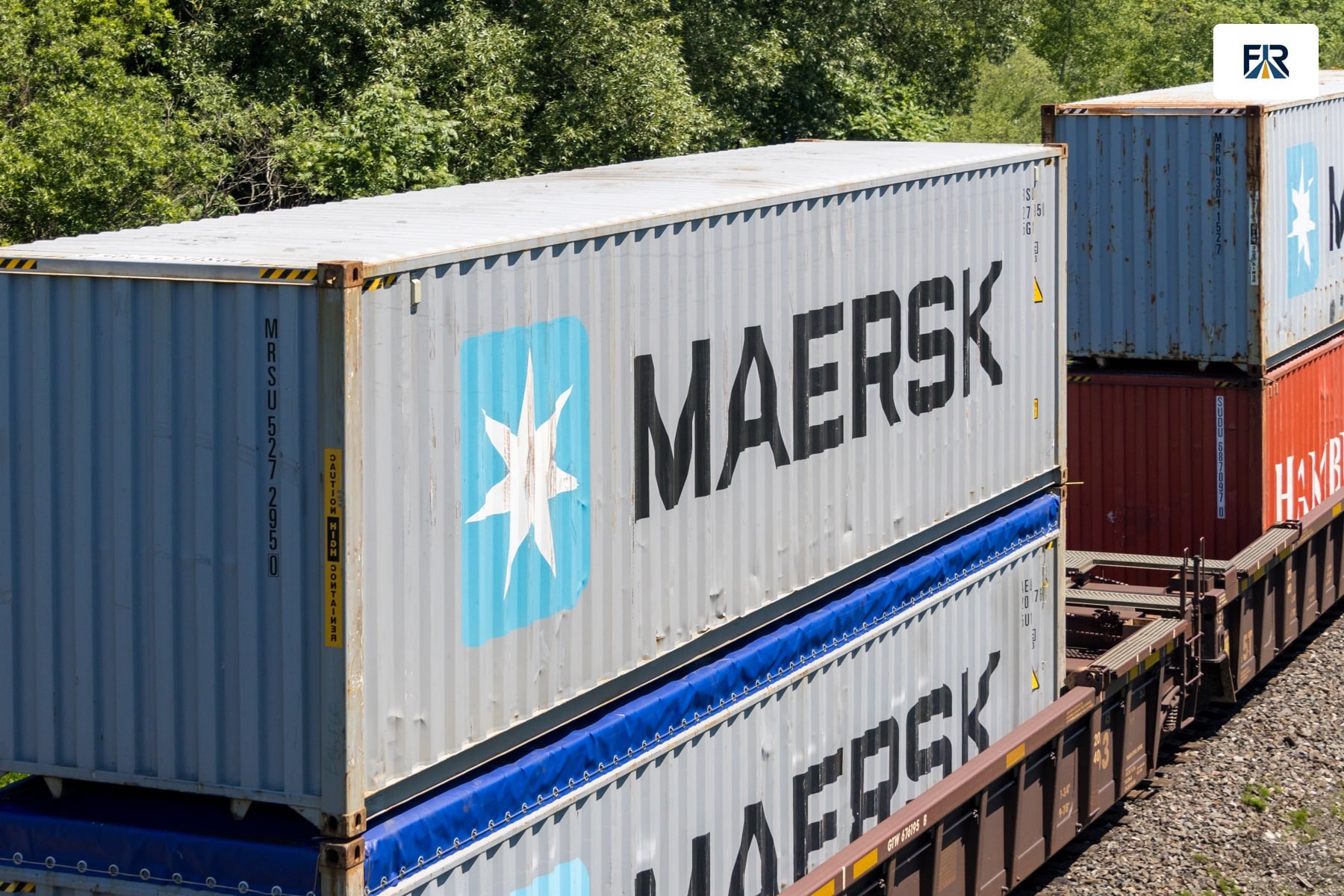
A shipment can have more than one fuel charge without either line being a billing mistake. That is the distinction shippers should check now that Maersk’s higher U.S. and Canada Emergency Intermodal Fuel Surcharge has reached its November 16 effective date.
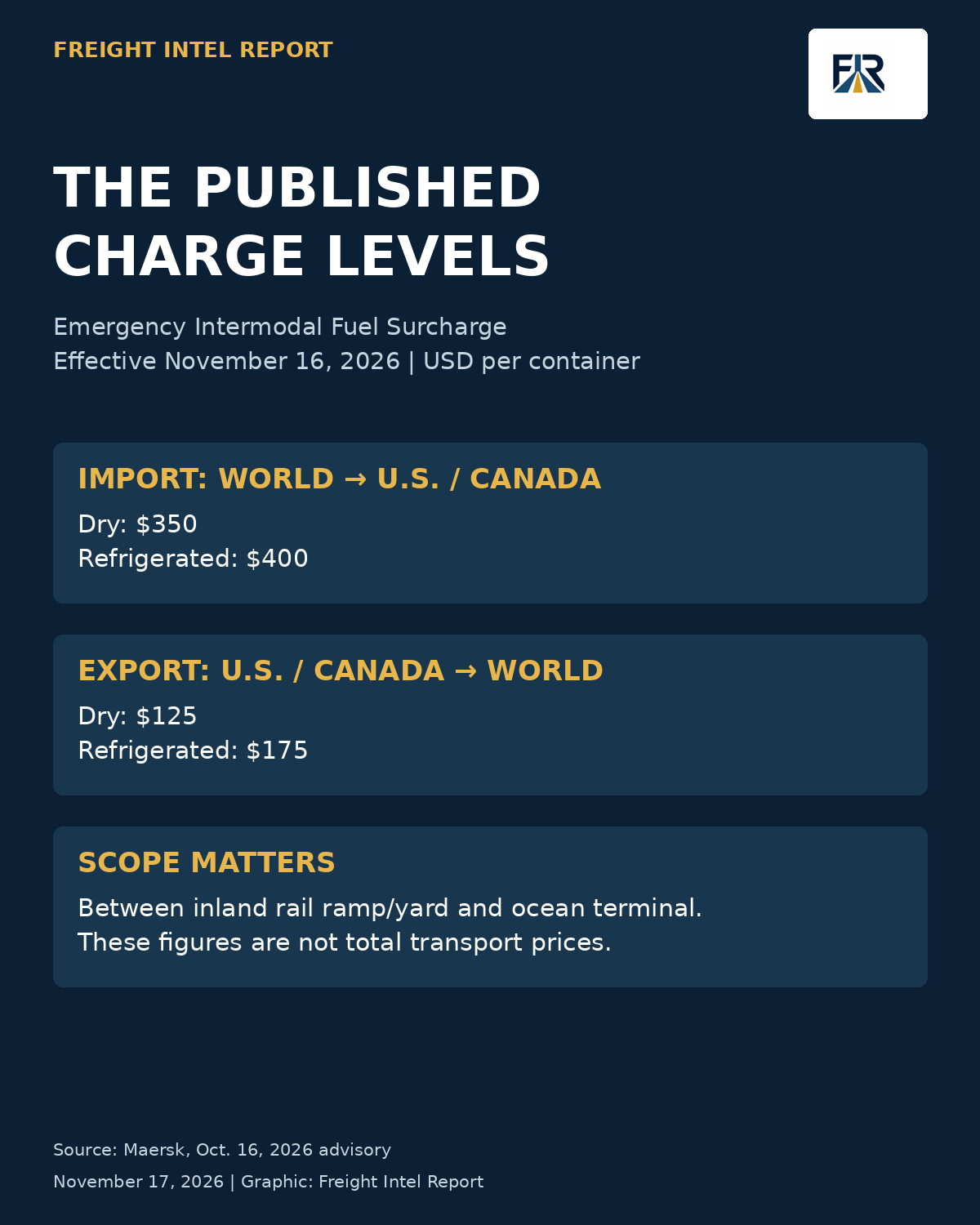
The immediate risk is approving—or disputing—a bill before matching each charge to the leg it covers. For cargo moving on a door-service arrangement, Maersk says the intermodal surcharge is separate from inland fuel charges associated with pickup or delivery. Its October 16 advisory covers movements between an inland rail ramp or container yard and an ocean terminal in the United States or Canada.
This is an implementation checkpoint for an announced increase, rather than a newly announced charge. FIR has not verified individual customer invoices or negotiated contract treatment.
The published amounts are only part of the bill
Maersk lists import charges of $350 per dry container and $400 per refrigerated container, and export charges of $125 and $175 respectively. These are surcharge amounts, not total transportation prices.
A separate U.S. inland-haulage advisory increased the Import/Export Fuel Surcharge from $140 to $215 per container for qualifying shipments with a Price Calculation Date on or after November 1. That notice applies where Maersk arranges trucking to or from the U.S. door under its ocean bill of lading.
Those two notices describe different scopes. Shippers should not automatically add the amounts together for every container, or conclude that two fuel lines constitute duplicate billing. Identify the actual routing, service arrangement and applicable terms first.
The date test can change the answer
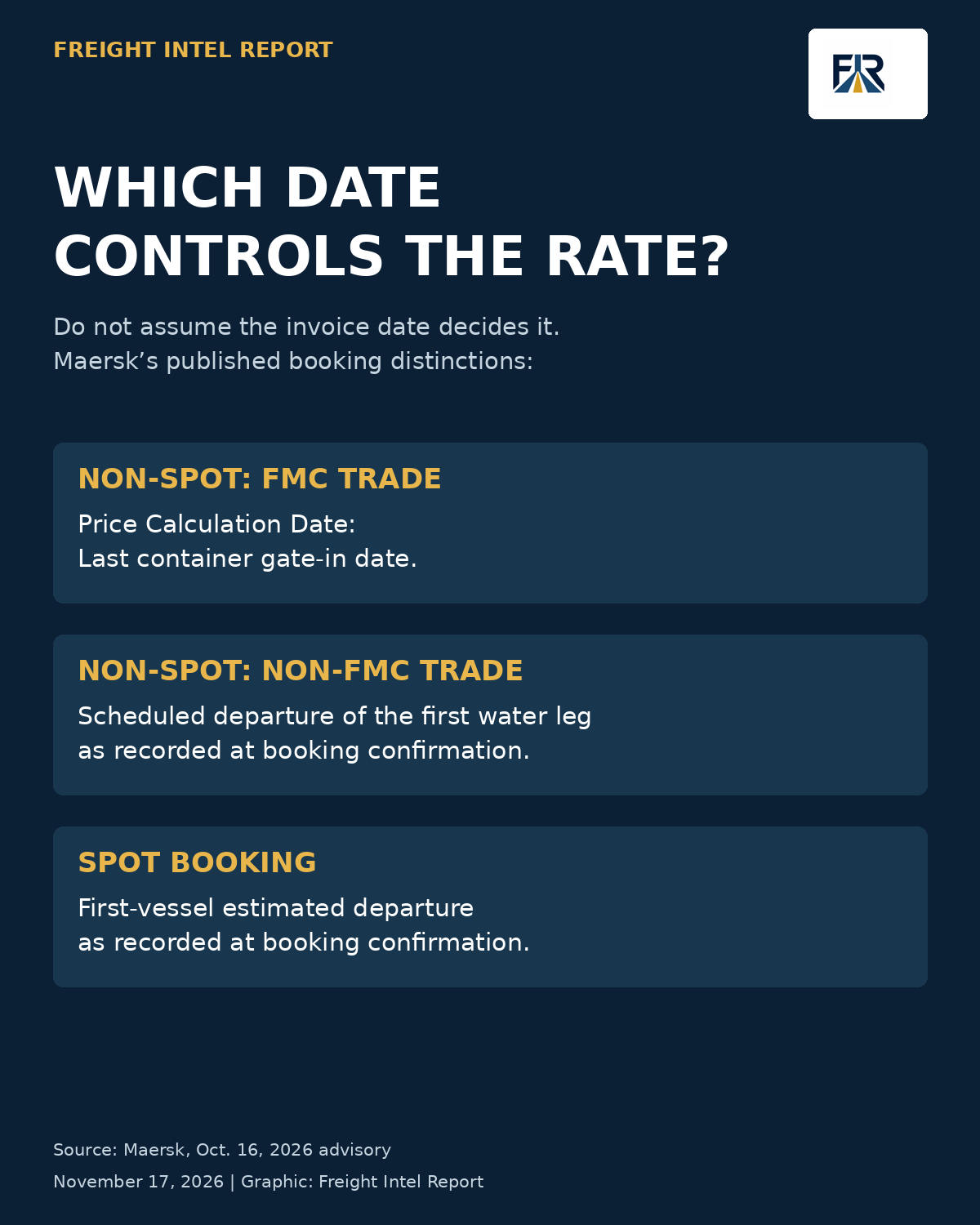
The intermodal advisory distinguishes SPOT bookings from non-SPOT bookings. For non-SPOT FMC trades, its Price Calculation Date is the last container gate-in date; for non-FMC trades, it uses the scheduled first-water-leg departure recorded at booking confirmation. SPOT treatment uses the first vessel’s estimated departure at booking confirmation.
FIR’s recommendation is to retain the booking confirmation and gate-in evidence with the quote and invoice. Ask the carrier to identify the controlling date and service terms for the shipment. A November invoice, by itself, does not establish which published level applies.
What procurement and operations should do today
Build a leg-by-leg reconciliation before approving affected invoices: ocean terminal to inland ramp or yard; pickup or delivery; and any separately contracted handling or storage. Record the charge code, amount, service covered and supporting contractual basis beside each leg.
Then compare the approved quote with the invoice. Escalate an unexplained difference through the agreed dispute process, with the booking and rate evidence attached. Keep the billing review separate from cargo-release planning so a commercial question does not become an avoidable delivery failure.
For new bookings, request an itemized delivered-cost quote. If comparing carrier haulage with merchant-arranged trucking or a transload option, price the same complete movement and delivery commitment. Include equipment availability, handling, free time, empty return and responsibility for exceptions; a lower quoted fuel line does not establish a lower delivered cost.
Prepare for either outcome
If the charge is confirmed: update the affected lane budget and customer quote, and document how long the price remains valid.
If applicability is disputed or unresolved: obtain a written explanation, preserve contractual deadlines and maintain a workable delivery plan while the commercial review continues. Do not promise a refund before it is confirmed.
If Maersk revises the level or treatment: reassess open bookings against the revised effective-date rules. Do not assume a later reduction automatically changes an earlier shipment.
We will continue to follow this story as it develops. FIR will update this article when verified carrier guidance changes the amounts, scope or application. Subscribe to FIR for continuing coverage.
Sources
- Maersk: U.S. & Canada Emergency Intermodal Fuel Surcharge, October 16, 2026
- Maersk: U.S. inland-haulage fuel surcharge, October 12, 2026
- Original photograph · CC BY-SA 4.0 license (applies to the branded photo adaptation)


Leave a Reply