
Regulation, Infrastructure & Risk
Policy, infrastructure investment, compliance, safety, fraud and systemic risk across the freight network.
-
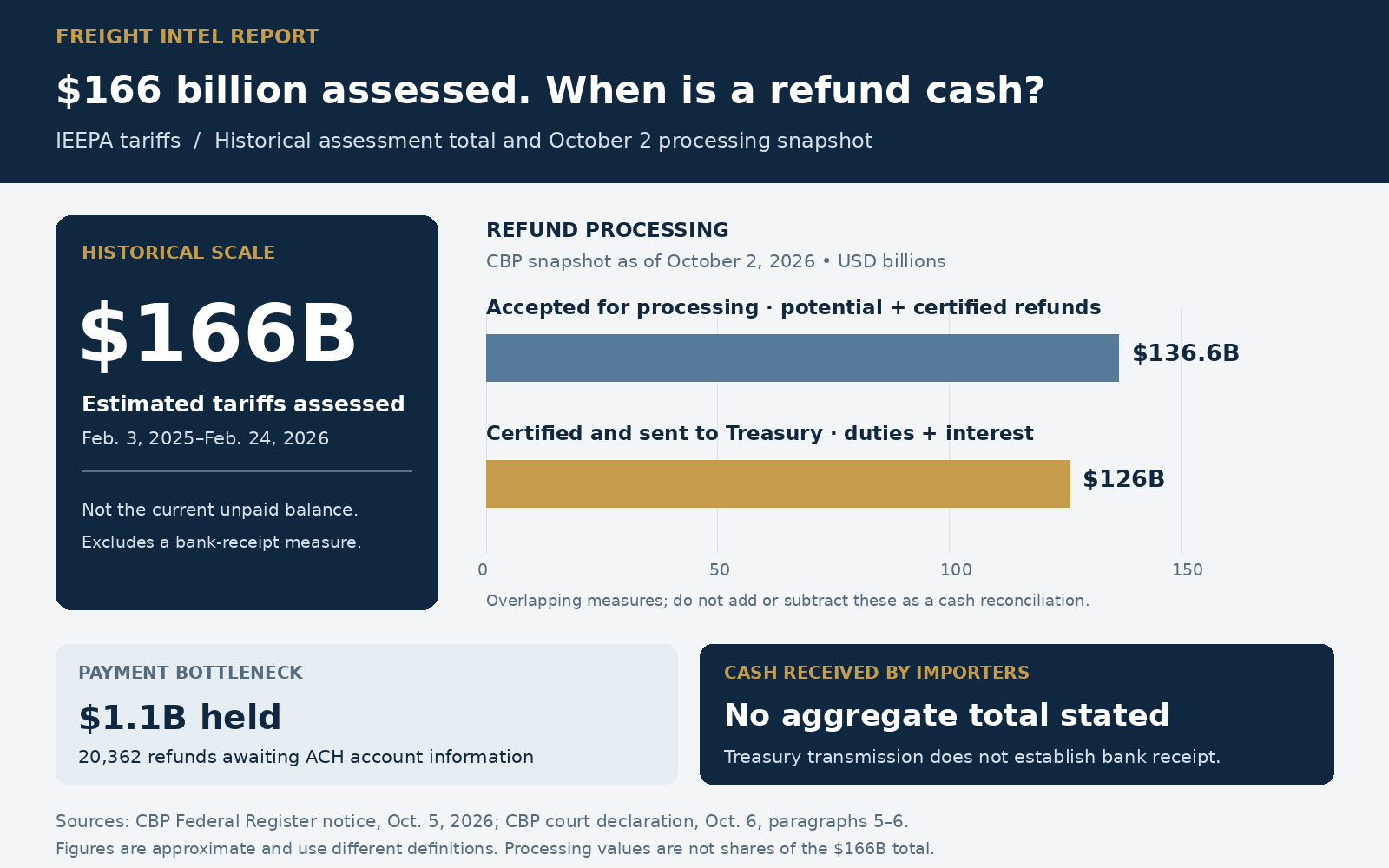
$166 Billion in Tariffs Assessed—What Importers Must Verify Before Counting Refunds as Cash
An expected tariff refund can influence an importer’s next inventory order, transportation commitment or financing decision. But a claim that has entered a government processing system is not the same…
-
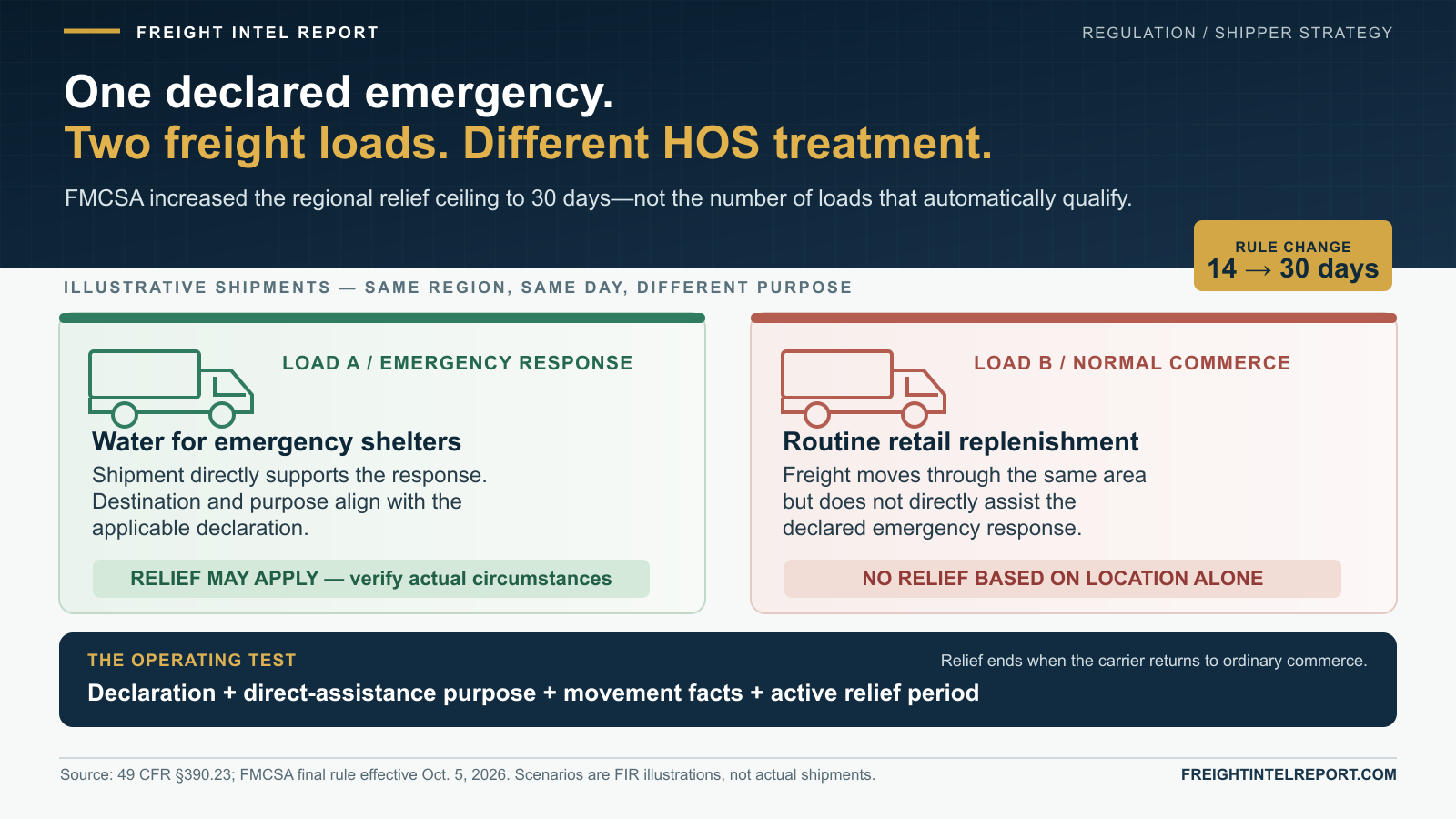
FMCSA Doubled Emergency HOS Relief to 30 Days—That Does Not Make Every Disaster Load Exempt
FMCSA doubled the automatic regional-emergency HOS window from 14 days to 30. The change does not exempt every disaster-area load. FIR’s six-field test shows what shippers should document before relying…
-
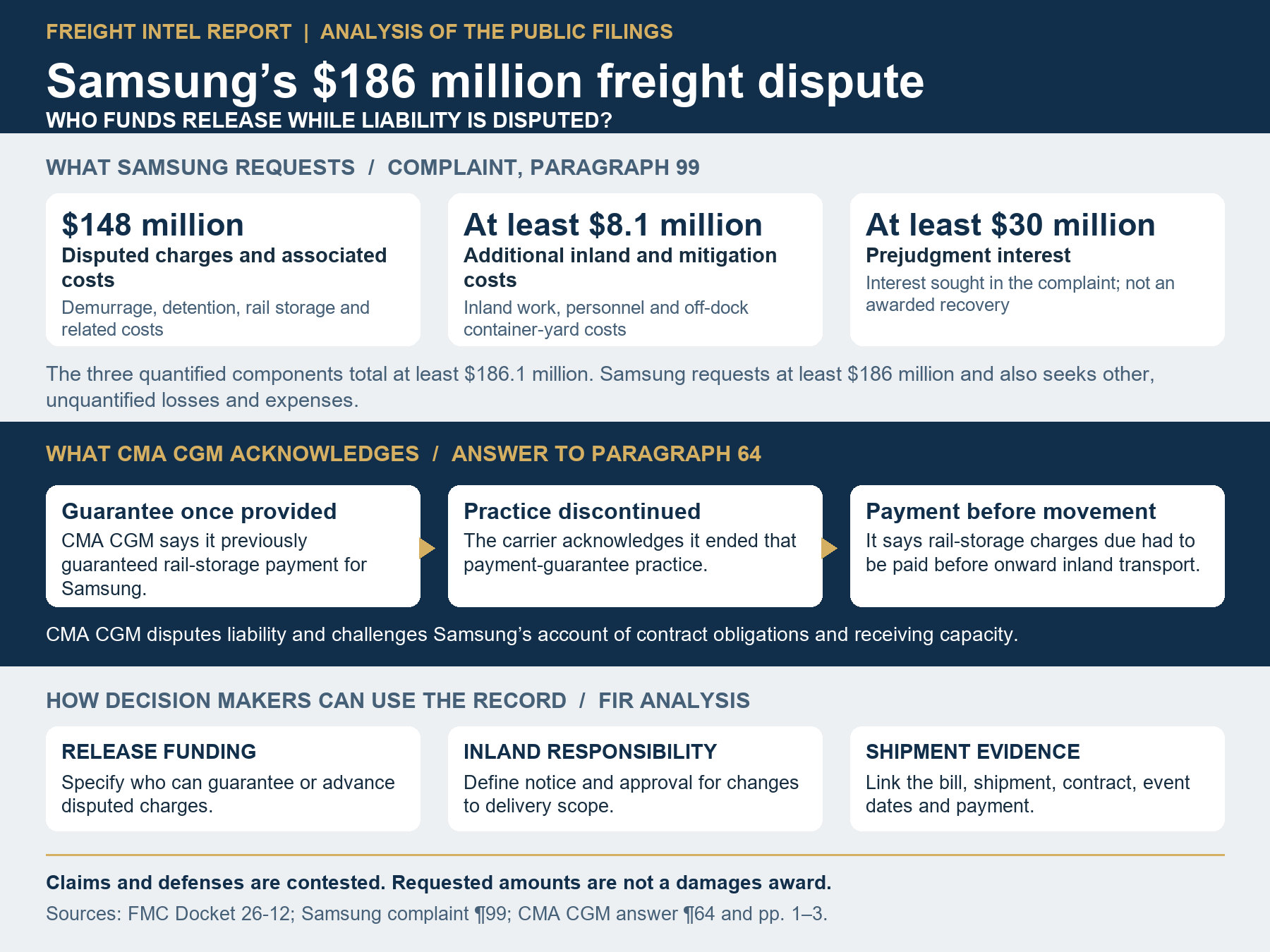
Samsung’s $186 Million Freight Dispute: Who Funds Cargo Release?
Samsung’s complaint and CMA CGM’s response put inland responsibility, rail-storage payment and shipment evidence at the center of a consequential freight dispute.
-
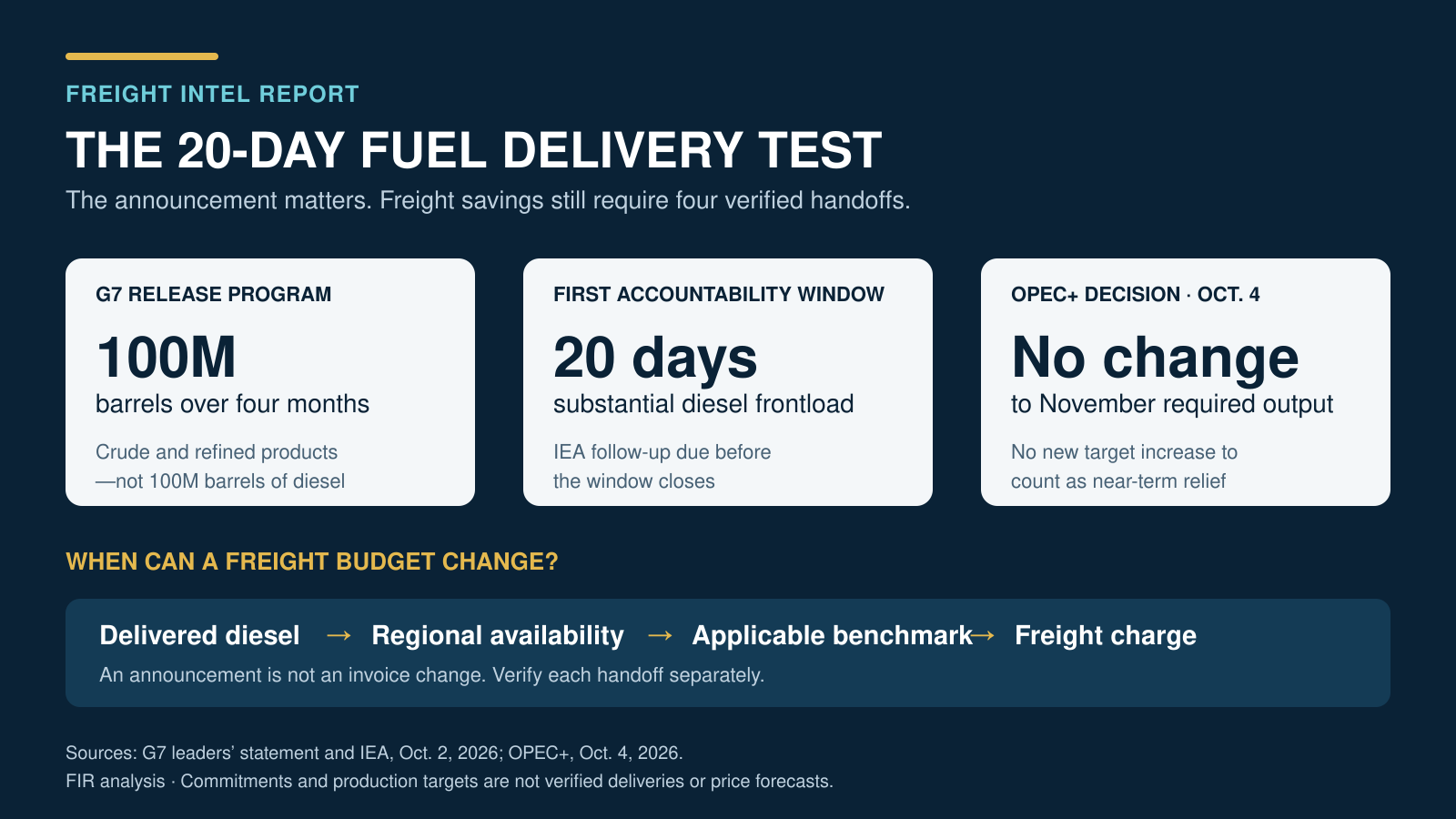
The G7’s 100-Million-Barrel Fuel Release Starts a 20-Day Delivery Test for Freight
The G7’s 100-million-barrel program includes a substantial diesel release in the first 20 days. Freight savings remain conditional on delivered product, regional availability and the benchmark written into the contract.
-
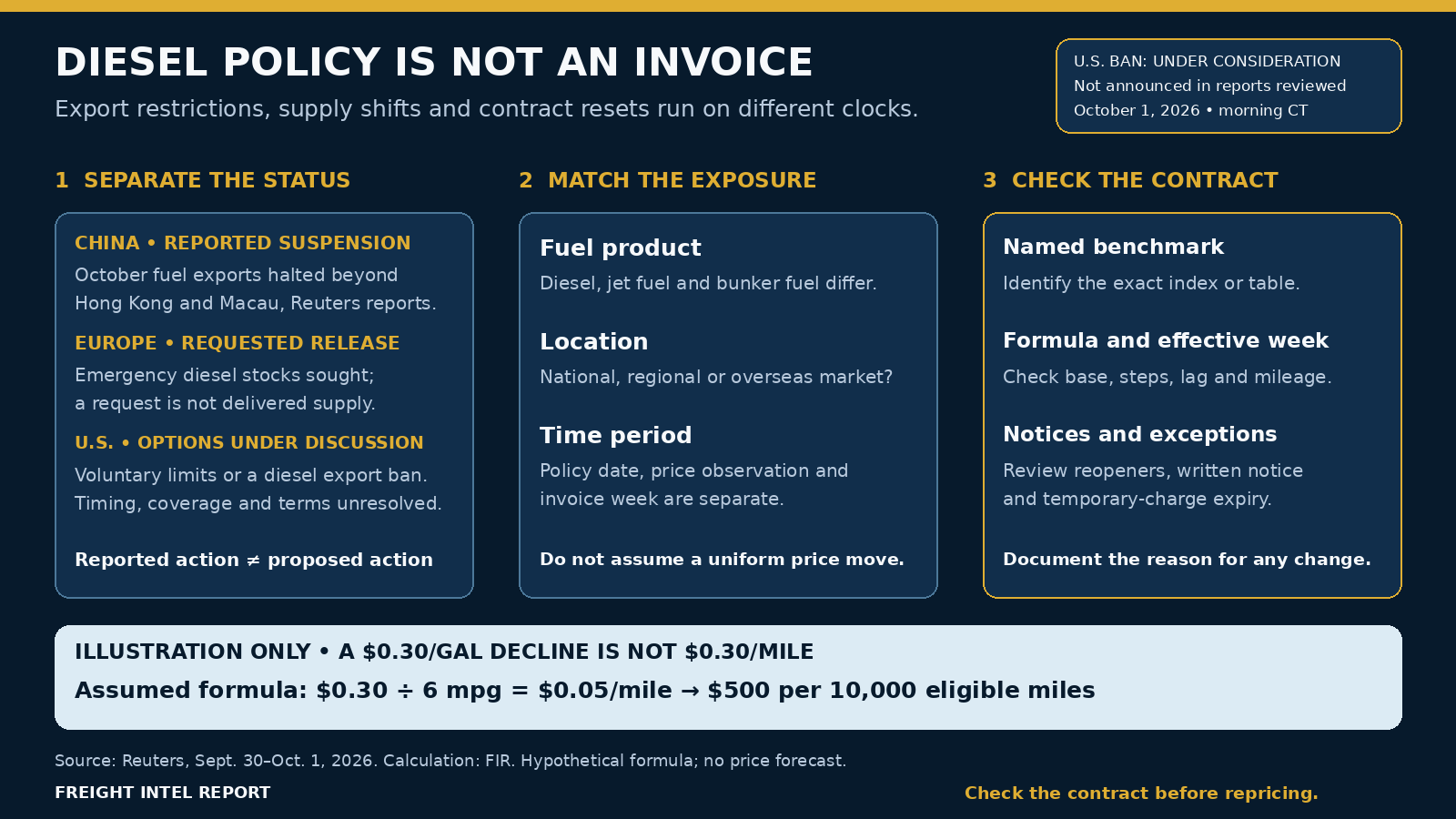
China’s Fuel Export Halt Raises the Stakes of a Possible U.S. Diesel Ban—What Changes a Shipper’s Bill?
China’s reported fuel-export halt raises global supply risk. FIR separates policy, fuel benchmarks and the contract terms that change freight invoices.
-
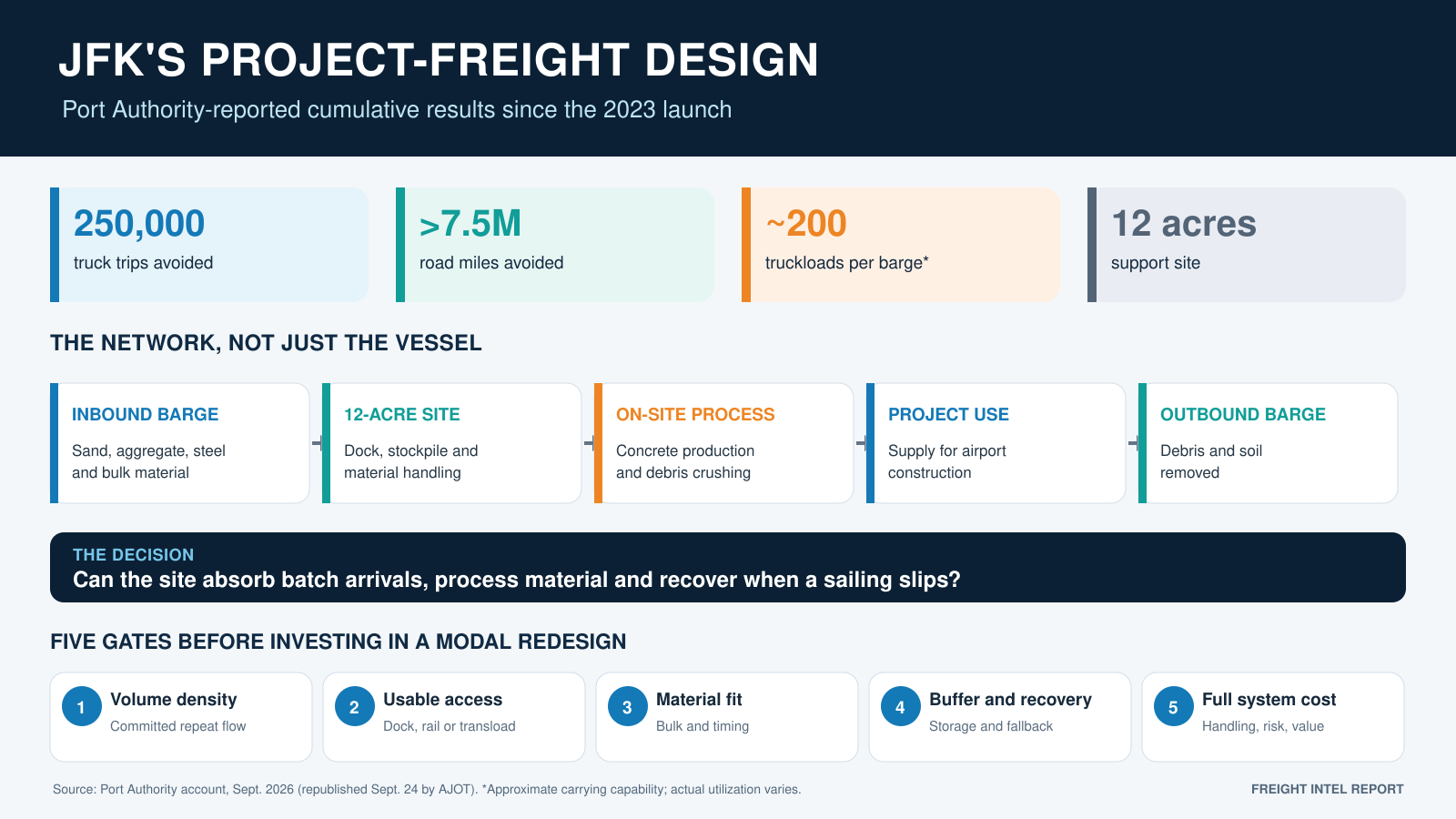
Port Authority Says JFK Barges Replaced 250,000 Truck Trips—What Made the Shift Work?
The Port Authority says JFK barges replaced 250,000 truck trips. FIR examines the 12-acre logistics site, batch risk and five gates for project-freight redesign.
-
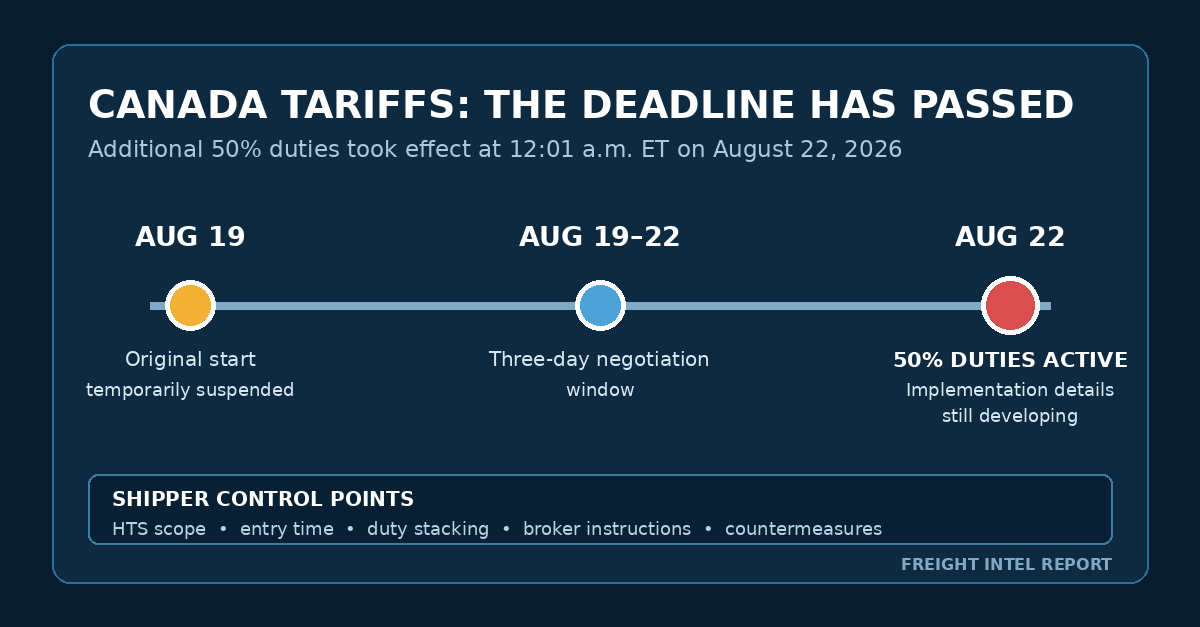
U.S. 50% Canada Tariffs Take Effect: Five Controls Importers Need Now
The additional 50% U.S. tariffs on specified Canadian goods are active. Five controls importers, brokers and supply-chain leaders should implement now.
-
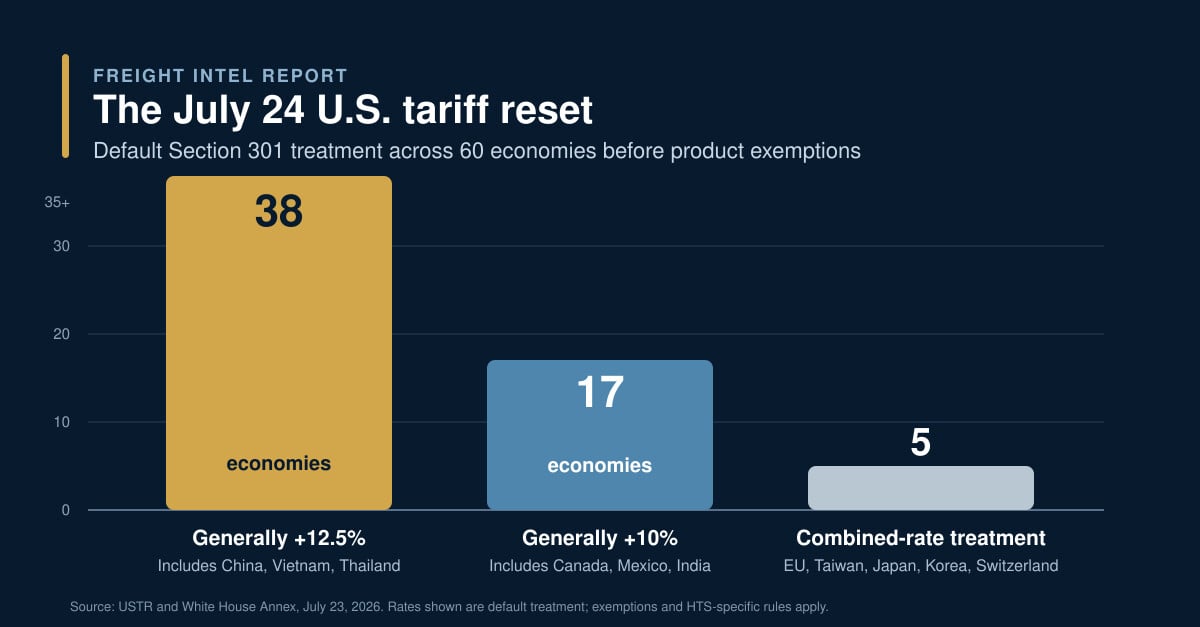
The July 24 Tariff Reset: What Importers Must Audit Now
The 10% global surcharge expired July 24, but a new Section 301 regime immediately replaced broad import-cost exposure. Here is the entry audit importers need now.
-
 Carrier & Broker Risk · Freight Markets · Maritime, Ports & Drayage · Regulation, Infrastructure & Risk · Shipper Strategy
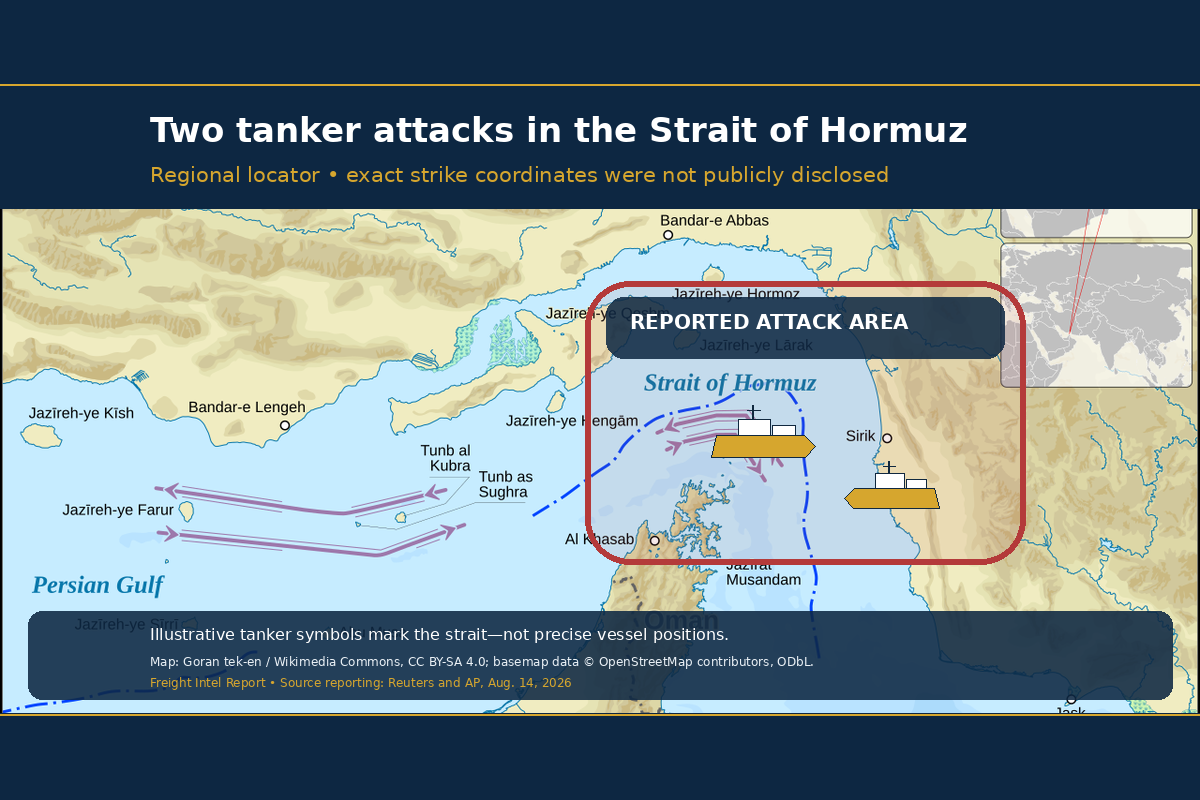
U.S. Strikes Three Iranian Oil Tankers as Hormuz Traffic Stays Constrained—The Freight Cost Exposure
Two additional tanker attacks and below-average Hormuz traffic expose U.S. shippers to fuel, insurance and capacity costs—even without a full closure.