
FIR Update · Read our original analysis of CPKC’s request.
Union Pacific met a deadline that could have stopped the procedural clock in the proposed Union Pacific–Norfolk Southern merger review.
That does not resolve the merger, CPKC’s request to terminate the proceeding or the Board’s concerns about possible retaliation. It does clarify what rail shippers should do next and when they should do it.
The Surface Transportation Board served Decision No. 45 on November 4. The decision ordered Union Pacific to remove the confidential label from a video of Chief Executive Officer Jim Vena’s March address to the Southwest Association of Rail Shippers, provide the redesignated copy to all parties of record and certify compliance by 5:00 p.m. ET on November 5.
The Board said that if UP did not file the certification by the deadline, it anticipated putting the proceeding in abeyance and tolling all procedural dates until UP complied and the Board set a new schedule.
Union Pacific filed the required verified statement on November 5. It says the railroad removed the confidential label and provided the redesignated video to all parties at 3:30 p.m. ET. The certification-based abeyance was therefore not triggered.
For shippers, the practical result is an active review with three dates that serve three different purposes. None is an announced merger decision date.
November 18 is the participation date
The Board said it will accept comments filed by interested persons by November 18 even if they did not previously file a notice of intent to participate. A person that files and serves both a comment and a notice of intent by the deadline will be deemed a party unless the Board orders otherwise.
That creates a narrow opportunity for shippers that did not join the proceeding earlier but have operating evidence that could inform the record.
A useful submission should separate documented facts from expectations about a combined railroad. Relevant evidence can include current interchange performance, access to competing carriers, local switching constraints, equipment availability, terminal or transload dependencies and the operational consequence of a service failure.
The Board also invited stakeholders and trade associations to report perceived, threatened or actual retaliation relevant to the proceeding. A general concern or a rate change by itself does not establish retaliation. Companies considering a filing should preserve the original communications, dates, people involved, applicable contract or rate terms and resulting service or commercial action. Confidentiality and legal questions should be addressed before commercially sensitive material is submitted.
November 19 is the response date
CPKC asked the Board on October 30 to terminate the merger proceeding, arguing that alleged intimidation had compromised the public participation required for a fair review. CPKC is a competing railroad and an opponent of the transaction. Its allegations and requested remedy are positions for the Board to decide, not findings already adopted by the agency.
Decision No. 45 directs the applicants to respond to CPKC’s letter by November 19. The Board said it will address CPKC’s request in a subsequent decision.
Rail shippers should read the response for evidence and commitments that affect their own options, rather than treating the filing as a vote on the transaction. Questions include whether the applicants identify enforceable protections for participation, whether they address specific conduct alleged in the record and whether their answer changes the expected procedural path.
The November 19 filing will not itself approve or reject the merger. It is one input to the Board’s next procedural decision.
December 4 is the evidence-production date
The Board ordered UP to file retaliation-related documents and verified statements by December 4. The production covers specified communications from July 28, 2025, through November 4, 2026, involving customers, potential customers, non-applicant railroads and vendors and possible actions involving rates, service, infrastructure, contract terms or doing business with UP or Norfolk Southern.
That deadline matters because the Board said evidence of actual or threatened retaliation could affect how it proceeds, how it weighs statements of support and participation levels, and other parts of its public-interest assessment.
The production will require careful reading. A communication in the record is not automatically proof of retaliation, and the absence of a public document may reflect the proceeding’s protective order. Shippers should distinguish verified evidence, party allegations and FIR analysis.
The shipper decision is commercial as well as procedural
The active review does not make a proposed future network available today. It also does not suspend existing rates, service obligations or contracts.
Transportation teams should keep current routings executable while they evaluate promised merger benefits. For each affected lane, document the service available now, the improvement claimed for a combined network and the fallback required if the improvement is delayed or does not materialize.
A second railroad on a map may not be a usable alternative for a specific facility. Validate switching access, interchange requirements, equipment, transload or drayage needs, inventory time and the cost of recovery. An untested routing is not contingency capacity.
Where merger-dependent savings appear in a budget or sourcing decision, identify which assumption creates the saving and when it can be measured. Avoid committing volume on the premise of a faster future route before pickup, handoff, terminal, delivery and exception responsibilities are defined.
What to do before November 18
- Decide whether the company has lane-specific evidence that could improve the record.
- Confirm the filing and service requirements in the controlling docket before relying on the deadline.
- Preserve original communications and operating records if retaliation or commercial pressure is a concern.
- Separate current service facts from merger forecasts and company claims.
- Keep priced, qualified recovery options for production-critical freight.
- Assign an owner to read the November 19 response and the December 4 evidence production.
The certification deadline has passed, but the decision window has not. Shippers now have a participation clock, a response clock and an evidence clock. Using the right one for the right decision is more valuable than treating every filing as a signal that the merger will advance or fail.
We will continue to follow this story as it develops.
Sources and reporting note
Research checked November 6, 2026. This article uses STB Decision No. 45, Union Pacific verified statement 312802, CPKC’s October 30 public filing and the STB’s UP–NS merger resources. FIR is not claiming first or exclusive reporting. Procedural descriptions reflect the cited records; shipper recommendations are FIR analysis, not predictions of the Board’s decision.
Primary sources
- STB Decision No. 45, Finance Docket 36873, served November 4, 2026
- Union Pacific verified statement 312802, filed November 5, 2026
- CPKC October 30 filing 312764
- STB UP–NS merger resources
- FIR’s November 1 analysis of CPKC’s termination request
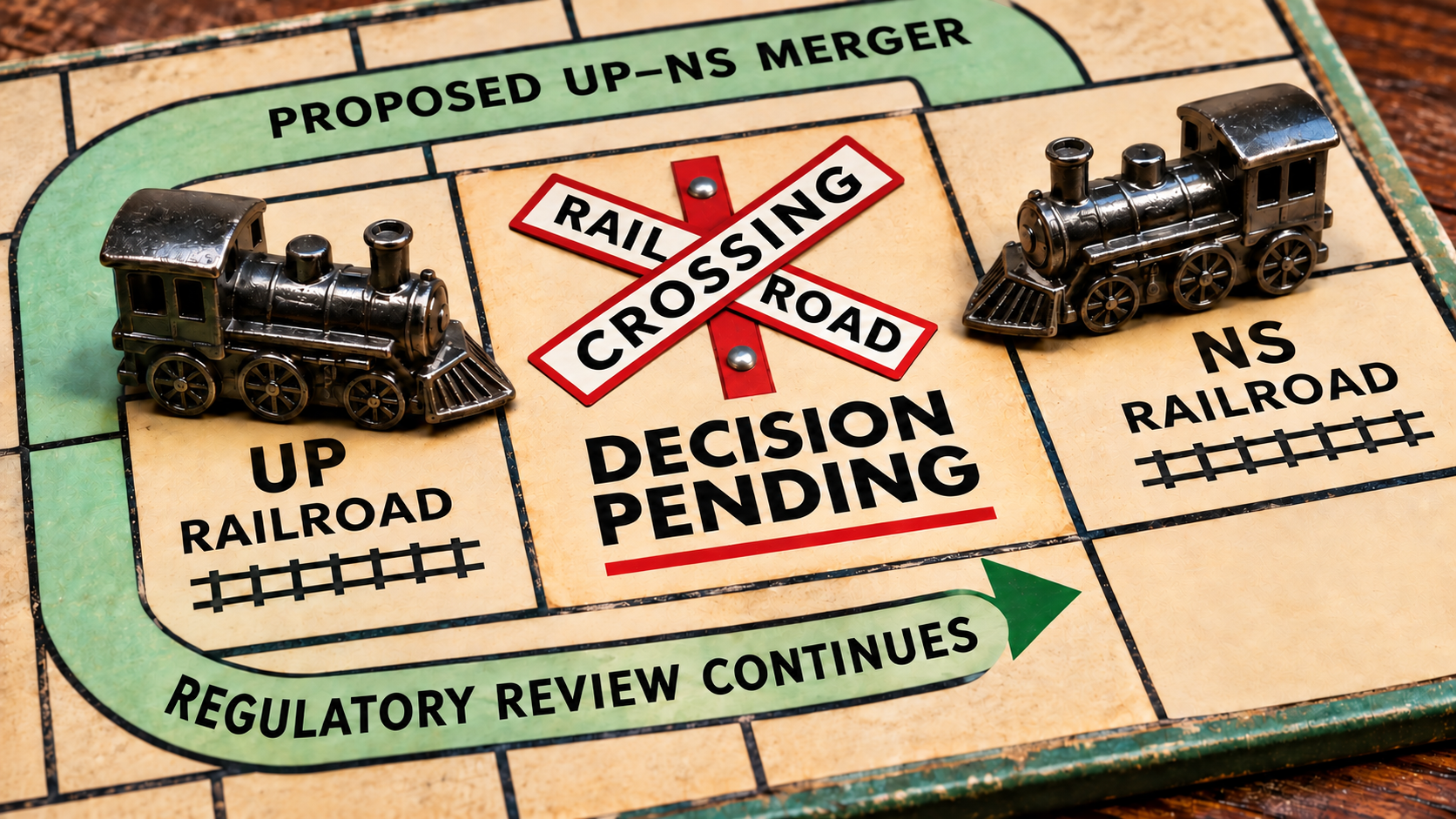
Illustration: Freight Intel Report.


Leave a Reply