
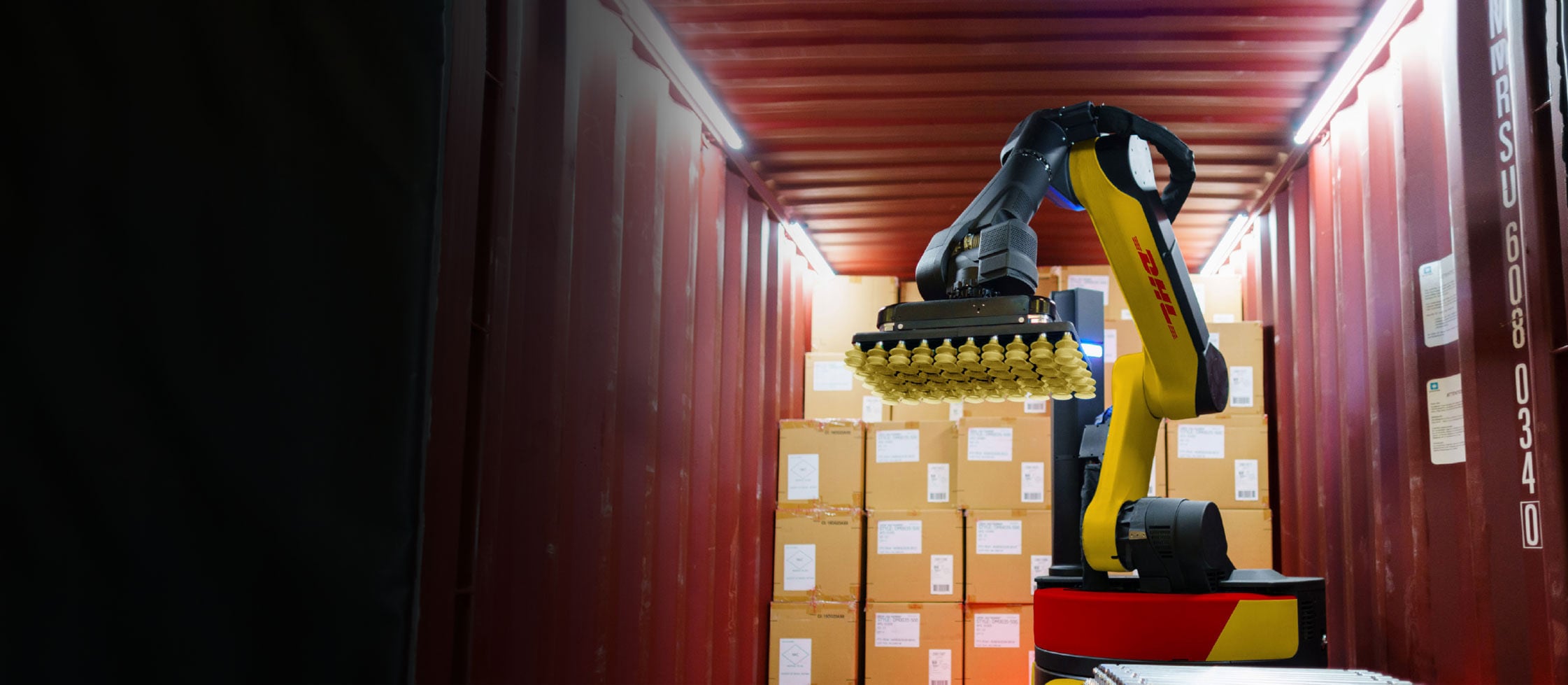
A warehouse can pick faster and still miss the truck. For shippers evaluating the next wave of AI and robotics, the important question is whether the entire order reaches the dock correctly and on time.
DHL Supply Chain’s November 9 announcement brings that question into focus. The company says it is moving AI orchestration into live warehouse operations while piloting adaptive robots that can respond to changing surroundings. It also reports having deployed more than 9,000 robots across its global network. Those are different stages of adoption, with different implications for a shipper deciding which capabilities to include in a logistics contract. DHL announcement, November 9, 2026.
The opportunity is coordination. A shipper could benefit if a warehouse can adjust work across people and machines as order demand changes. That benefit needs to show up in complete orders, loading readiness and dependable departures. Network-wide adoption figures give procurement a reason to investigate. Site-specific operating evidence should determine what the customer buys.
What orchestration changes
Orchestration connects the decisions around work. A warehouse might have capable picking equipment, automated packaging and available employees, yet still struggle if their queues and priorities do not align. For a shipper, the question is whether the coordination system can see the order’s remaining work and the departure deadline, then make an appropriate adjustment.
Ask the operator to explain which decisions its system makes automatically, which it recommends to a supervisor and which remain fixed by the warehouse management system. Determine whether it can change task priorities, allocate equipment or request staff support. Each permission needs an owner and a record. A demonstration that moves an item successfully answers only part of the service question.
DHL’s announcement describes live orchestration and a workflow under test linking mobile robots, packaging automation and warehouse management systems. It does not provide a site-level comparison of shipping-cutoff performance, customer implementation cost or exception-recovery time. Treat those as evidence to request during procurement. The company’s descriptions establish its direction and reported deployment status. The shipper still needs results for its own operation.
Measure the order through the dock
Start with the customer promise and work backward. Define when an order must be released, picked, checked, packed, staged and available to load. Align those timestamps with the carrier appointment. Otherwise, a provider can improve a single task while leaving another queue to absorb the delay.
A useful acceptance scorecard combines order accuracy, readiness before the agreed cutoff, late-order backlog and human intervention. Include the time needed to recover after a machine or system interruption. Compare similar order types and staffing conditions over a stated period. Require shipment counts alongside percentages so a small trial cannot appear more representative than it is.
Keep peak-volume and difficult-order results visible. If a pilot handles only consistent cartons or uncomplicated orders, record that scope. Track the freight routed around automation, including rework and manual processing. That work consumes capacity and belongs in the assessment of the complete service.
The cost sits across several systems
Ask for an implementation price that covers interfaces, data preparation, validation, floor changes, training and support as applicable to the proposal. Establish who owns changes when an order-management system, warehouse system or robot supplier updates its software. A low initial equipment charge is difficult to evaluate without the continuing integration and support obligations.
Commercial terms should explain what the shipper receives in return for funding a project. Possibilities include a defined capacity commitment, a revised processing rate or an agreed service level. Make any gain-sharing calculation auditable. The contract should address transition disruption and identify who pays for manual coverage when the promised capability is unavailable.
Data rights deserve equal attention. Confirm access to order-event histories, exception records and decision logs needed to investigate a service failure. Establish which operational data a supplier can retain or reuse, and how the customer retrieves its records at contract exit. Changing providers becomes harder when the customer cannot reconstruct how its orders were handled.
Human recovery and safety belong in the design
The value of a more adaptive system depends partly on what happens when it encounters uncertainty. Ask what triggers a stop or escalation, who receives it, and how a trained person resumes work. Test interruption and restart procedures before expanding the allocation. An unresolved exception near the shipping cutoff can consume the time saved elsewhere.
For U.S. general-industry facilities, applicable federal OSHA machine-guarding requirements remain binding. Hazardous-energy controls apply to covered servicing and maintenance under the scope and exceptions of 29 CFR 1910.147. The specific equipment and activity determine the requirements, and state-plan rules may also matter. These are existing workplace obligations that a new AI capability must accommodate. OSHA machine guarding. OSHA hazardous-energy control.
OSHA’s robotics technical manual provides guidance on risk assessment, integration and validation. It is guidance rather than a separate robot deployment approval. NIST’s AI Risk Management Framework is voluntary and can help structure questions about ownership, monitoring and changes. The purchasing team should distinguish those resources from mandatory workplace standards when defining an acceptance plan. OSHA robotics guidance. NIST AI framework.
Adopt by evidence and operating scope
Set milestones around readiness. Begin with reliable order and inventory data, then verify interfaces and decision permissions. Evaluate recommendations under supervision before granting broader operating authority. Physical equipment also needs site-specific integration, safety validation and trained recovery coverage. The proposal should identify the dependencies and acceptance evidence for each stage.
DHL’s distinction between live orchestration and adaptive-robot pilots is useful for setting realistic expectations. A shipper should ask what is available at the proposed site now, what requires an implementation project and what remains experimental. Expansion should follow demonstrated reliability on the customer’s order mix, including exceptions and demanding operating periods.
For the next bid, request a site-specific capability statement, an all-in implementation and support price, and a scorecard tied to order completion before the shipping cutoff. Start with a bounded workflow and retain a workable fallback. Watch next for dated site deployments, published operating scope and comparable service results. The meaningful advance will be a warehouse that can adjust its work while keeping the shipper’s departure promise.

Leave a Reply