
Asian wheat buyers are no longer waiting for Black Sea shipping to normalize. They are replacing delayed Russian and Ukrainian cargoes with higher-cost grain from Australia and Argentina—and some urgent demand is moving in containers.
Importers in Asia have bought at least 500,000 metric tons of Australian and Argentine wheat in recent deals, according to three trade sources cited by Reuters on September 3. The purchases are intended to replace Black Sea cargoes delayed by attacks on vessels and grain-export infrastructure. Because the transaction volume and prices are based on trade-source reporting rather than official customs data, they should be treated as preliminary until shipments are executed.
The sourcing shift is already raising delivered costs
Australian Premium White wheat reportedly changed hands at roughly $315 to $330 per metric ton, including cost and freight, while Argentine wheat was booked around $310 to $315. The Black Sea cargoes being replaced had generally been booked at about $260 to $280 for August–September arrival. That puts the reported replacement premium at approximately $30 to $70 per ton before any additional storage, financing, demurrage or downstream handling costs.
The affected demand is meaningful. Asian processors had booked an estimated 2.0 million to 2.5 million tons of Black Sea wheat for July through September shipment—roughly 30% to 50% of import demand for some buyers. Indonesia, Bangladesh, Vietnam, Malaysia, Thailand and Sri Lanka are among the exposed markets. Reuters reported the replacement purchases and price ranges.
Why this is now a freight-capacity story
The important development is not merely that wheat prices increased. Buyers have changed origin, routing and—in urgent cases—transport mode. Reuters reported that some millers are using containerized wheat as a bridge while bulk cargoes remain delayed. The amount moving in containers has not been disclosed, so it would be premature to claim a broad container-capacity shock. But the shift creates localized demand for food-grade equipment, positioning, port handling and time-sensitive inland moves that would not exist if the original bulk programs were performing.
Official forecasts reinforce the scale of the underlying disruption. Ukraine’s Ministry of Agrarian Policy said August 7 that restrictions on seaports could reduce projected 2026–27 agricultural exports from 64.4 million to about 29.6 million metric tons. It said wheat exports alone could fall from 17.6 million to 8.3 million tons if the restrictions persist. Those are government scenarios—not completed export losses—but they show why buyers are building alternatives now. Read the Ukrainian ministry’s assessment.
The U.S. opportunity comes with a price warning
USDA’s August grain outlook reduced its 2026–27 wheat-export forecasts for Russia by 1.5 million tons and Ukraine by 1.0 million tons because Black Sea disruptions were hindering shipments. USDA also reported higher U.S. wheat export bids amid greater futures volatility: Hard Red Winter wheat rose $26 from the previous month to $321 per ton, Soft Red Winter rose $13 to $268 and Hard Red Spring rose $24 to $301. USDA’s Grain: World Markets and Trade report provides the underlying forecast and bid data.
That creates potential export demand for U.S. grain, but not a guaranteed windfall. Buyers still compare protein specifications, transit time, freight availability and delivered cost. U.S. exporters may gain selective opportunities while domestic food manufacturers face higher commodity and logistics costs from the same market tightening.
What shippers should do now
- Separate firm purchases from optional or reported volume. Do not plan capacity against the 500,000-ton figure until suppliers confirm contracts, loading windows and equipment.
- Price the entire recovery route. Compare commodity cost, ocean freight, insurance, port charges, storage, detention, demurrage and inland delivery—not only the wheat price.
- Model bulk and container options by urgency. Containers may protect a near-term production requirement, but they should not be assumed to replace bulk economics at scale.
- Protect food-grade equipment early. Confirm cleaning standards, liner requirements, container availability, weight limits and receiving appointments before tender.
- Recheck Black Sea contract terms. Determine whether original cargoes are delayed, canceled or still contractually live before layering replacement exposure.
- Watch U.S. export bids and Gulf capacity. A stronger American sales program could tighten elevation, rail, barge and vessel-loading capacity even before official export totals show the change.
What remains uncertain
The market still lacks public confirmation of how much of the reported replacement volume has been fully contracted and how much Black Sea tonnage is canceled rather than delayed. The size of the containerized component is also unknown, and there is not yet evidence that U.S. wheat has captured a material share of the replacement demand. Freight Intel Report will update those points as executed shipments and official trade data become available.
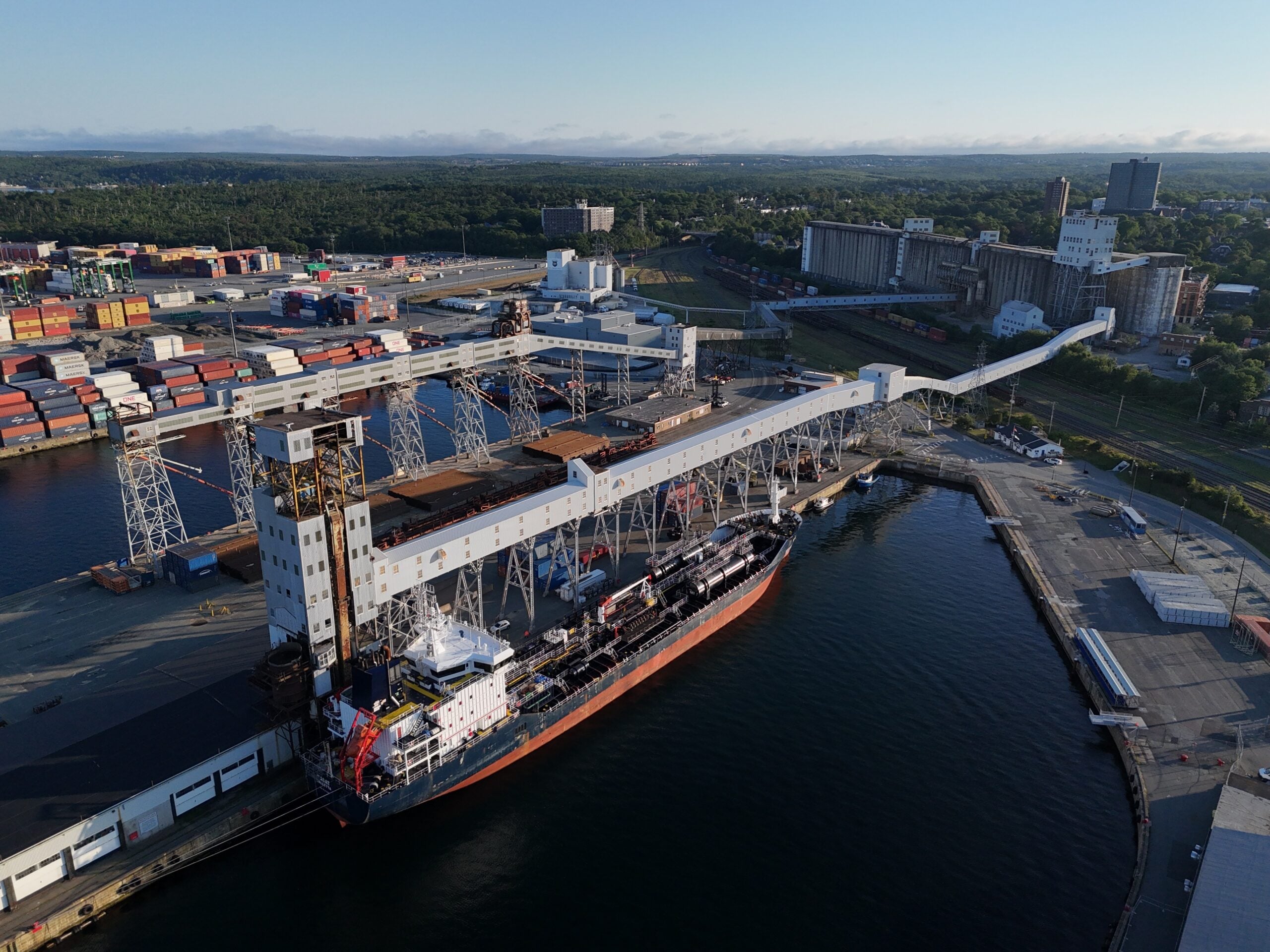
Featured photo: A bulk carrier loading at the Halifax Grain Elevator in Halifax, Nova Scotia. Quintin Soloviev/Wikimedia Commons, CC BY 4.0. The photograph is illustrative and does not depict the current Black Sea disruption.
Government services: For government services, verification, registrations, forms, reporting, or instructions, always navigate to the official agency website directly. Independently verify its address before entering credentials or business information.


Leave a Reply