
Panama Canal water constraints are moving from an operational warning into a line-item cost for Asia–U.S. East and Gulf Coast freight. Hapag-Lloyd says a $130-per-TEU Panama Canal surcharge applies to affected sailings beginning August 15, while MSC will charge $100 per TEU on qualifying cargo gated in from August 19. The Panama Canal Authority will then lower the maximum Neopanamax draft to 48 feet on August 26 and 47.5 feet on September 3.
The cost stack has three different layers
The draft restriction, carrier surcharge and canal-slot auction are related, but they are not the same charge.
- Draft limits are an operating constraint. They determine how deeply a loaded vessel may sit in the water. A lower limit can force a carrier to reduce cargo weight, change stowage or make other network adjustments.
- Carrier surcharges are customer invoice items. MSC’s $100-per-TEU charge covers cargo from Southeast Asia, China, Korea and Japan to the U.S. East and Gulf coasts via the canal, effective with an August 19 gate-in date. Hapag-Lloyd lists $130 per TEU for affected Far East–North America sailings via Panama beginning August 15.
- Transit-slot auctions are optional vessel-level premiums. They allow operators to bid for limited passage opportunities rather than wait. Financial Times reported on August 12 that August auction prices had reached record levels, including an individual bid of about $3.78 million. That is not a universal canal toll and should not be presented to a shipper as though every container incurred that amount.
What a container shipper can actually be billed
| Carrier notice | Trigger | 20-foot container | 40-foot container* |
|---|---|---|---|
| MSC Panama Canal Surcharge | Gate-in from Aug. 19; specified Asia origins to U.S. East/Gulf via Panama | $100 | $200 |
| Hapag-Lloyd Panama Canal Surcharge | Affected sailings from Aug. 15; Far East–North America via Panama | $130 | $260 |
Other carriers and forwarders may apply different amounts, scopes or effective-date rules. OOCL Logistics reported in July that announced low-water surcharges across the market ranged from $100 to $320 per TEU. Shippers should therefore audit the governing carrier notice and their negotiated rate terms rather than rely on an industry average.
This is not yet a canal-wide capacity shutdown
The latest Panama Canal Authority advisory explicitly says no reduction in available Neopanamax or Panamax transit slots is being implemented with the new draft limits. Its August 10 operating summary shows 1,055 oceangoing transits in July, averaging 34.03 per day. Neopanamax vessels accounted for 310 transits, or 29.4% of the total.
The same official report shows 247 auctioned booking slots used in July—equal to 23.4% of all oceangoing transits that month. That does not mean 23.4% of ships paid a seven-figure premium; auction prices vary substantially. It does show why booking discipline matters when close-in capacity becomes expensive.
Who should pay the closest attention
The clearest container exposure is cargo sourced in China and other Asian markets and routed to U.S. East or Gulf Coast ports through Panama. That includes high-volume retail and manufacturing supply chains such as furniture, home goods, appliances, building products and seasonal merchandise.
Dense or heavy cargo deserves extra scrutiny because draft restrictions limit vessel payload by weight, not simply by box count. The actual service effect depends on the vessel, stowage plan, cargo mix, fuel and other operating variables; the Canal Authority has not published a universal container-loss estimate for the 47.5-foot limit.
A six-point surcharge audit
- Confirm the physical route. The bill of lading, booking confirmation and service string should show whether the container actually moved via Panama.
- Match the effective-date trigger. MSC uses gate-in date; Hapag-Lloyd refers to the sailing commencement date. A booking date alone may not determine applicability.
- Check origin, destination and equipment scope. A canal surcharge announced for one trade lane should not automatically migrate to unrelated origins, U.S. West Coast cargo or a service that did not use Panama.
- Recalculate the TEUs. A per-TEU charge normally doubles on a 40-foot box. Confirm that the invoice did not also apply the amount as a per-container fee.
- Review contract protections. Compare the invoice with the service contract, tariff publication, quotation validity and any all-in or surcharge-exclusion language.
- Separate pass-throughs from markups. If an NVOCC, forwarder or broker rebills the surcharge, request the underlying carrier notice and a clear explanation of any administrative markup.
Routing decisions require an all-in comparison
A $100–$130-per-TEU surcharge alone is not a reason to move every shipment to the U.S. West Coast. The proper comparison includes ocean freight, transload, rail or truck cost, inventory days, port reliability, contractual commitments and the receiver’s inland location.
Importers with time-sensitive late-August and September cargo should ask carriers now whether planned sailings remain within draft limits, whether cargo will be rolled or weight-restricted, which surcharge trigger controls, and whether alternative services are being offered. Keep those answers with the booking record so the eventual invoice can be tested against what was promised.
What remains unknown
The Canal Authority says weather is changing faster than anticipated and further operating adjustments remain possible. It has not reduced daily transit slots at this time. Auction prices are volatile, and the degree to which those vessel-level costs flow into spot rates, peak-season surcharges or future contract negotiations will vary by carrier and lane.
Executive takeaway
The Panama Canal issue has entered a more consequential phase for Asia–U.S. East and Gulf Coast shippers: draft limits are tightening again, carrier surcharges have effective dates in the next week, and close-in passage can be extremely expensive. The immediate response is not panic rerouting. It is disciplined booking, written service confirmation and line-by-line invoice validation.
Discussion: Are canal surcharges changing your routing decisions, or are inland costs still keeping East and Gulf Coast services competitive?
Stay ahead of consequential freight costs. Subscribe free to Freight Intel Report for sourced, decision-useful analysis on rates, accessorials, capacity, regulation and supply-chain risk.
Primary and supporting sources: Panama Canal Authority Advisory A-25-2026, August 5, 2026; Panama Canal Authority July operating summary, August 10, 2026; MSC customer advisory, July 20, 2026; Hapag-Lloyd customer advisory, July 2026; OOCL Logistics update, July 22, 2026; Reuters, August 5, 2026; Financial Times, August 12, 2026.
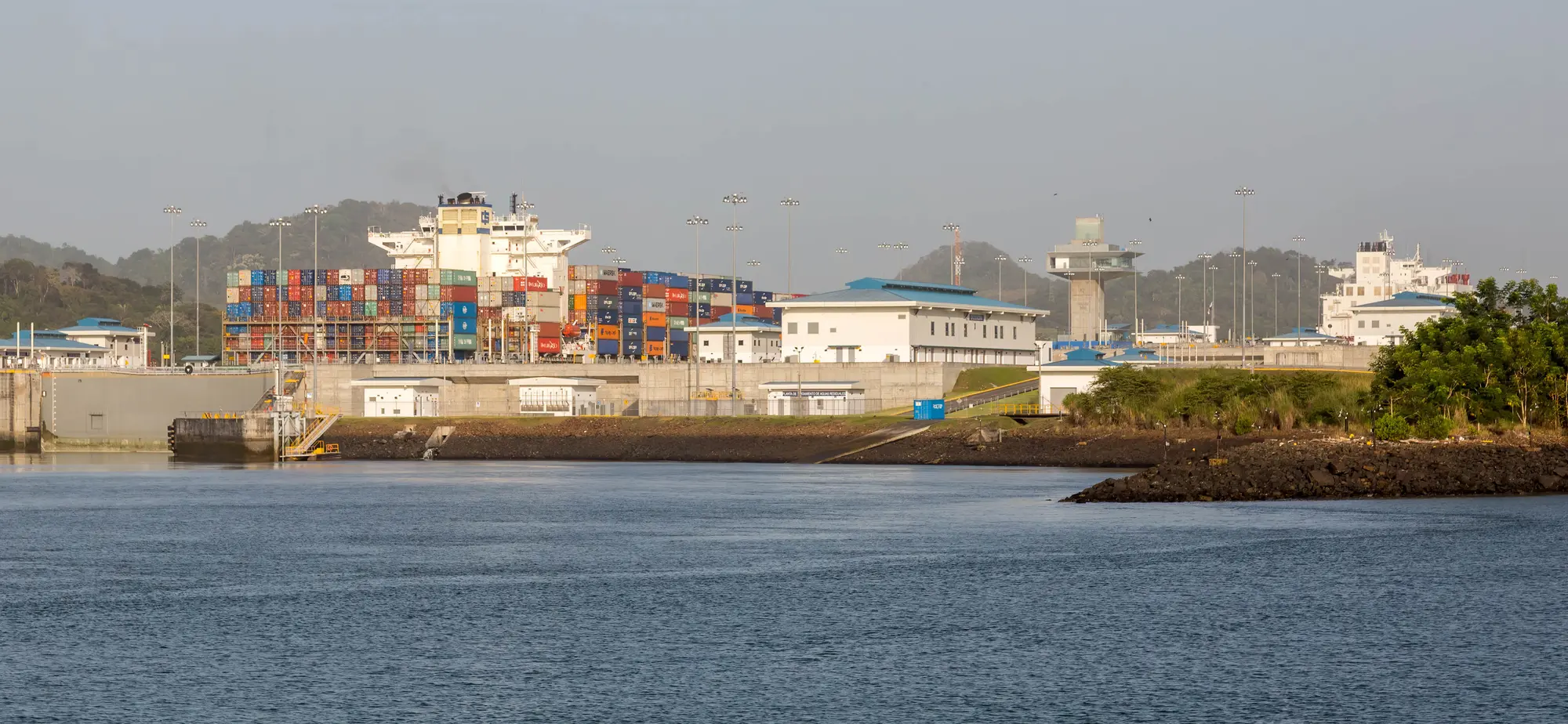
Featured image: Container ship entering the Cocoli Locks of the Panama Canal. Photo: David Brossard, CC BY-SA 2.0, via Wikimedia Commons.
Government services: For government services, verification, registrations, forms, reporting, or instructions, always navigate to the official agency website directly. Independently verify its address before entering credentials or business information.

Leave a Reply