
A federal appeals court has preserved the rule requiring at least two crewmembers on most U.S. freight trains, closing—at least for now—a major legal route toward broad one-person Class I operations. The decision matters less as an immediate capacity event than as a long-term constraint on railroad labor models, conductor redeployment and automation strategy.
What the court decided
On August 11, 2026, the U.S. Court of Appeals for the Eleventh Circuit denied consolidated petitions challenging the Federal Railroad Administration’s train-crew-size rule. The challengers included six railroads—Florida East Coast Railway, Texas & Northern Railway, Indiana Rail Road, Union Pacific, Nebraska Central and BNSF—plus the Association of American Railroads and the American Short Line and Regional Railroad Association.
The railroads argued, among other things, that FRA exceeded its authority and failed to account adequately for the labor expense associated with maintaining two-person crews. The court rejected the challenges. One judge dissented, questioning the evidentiary basis and cost-benefit analysis, according to Reuters’ August 11 report.
The underlying FRA final rule was published April 9, 2024, and took effect June 10, 2024. It generally requires two crewmembers but preserves defined exceptions and establishes notice, risk-assessment, special-approval and annual-reporting requirements for qualifying one-person operations.
The freight impact is strategic—not an overnight capacity shock
Fact: The largest U.S. freight railroads generally already operate road trains with two-person crews, often under collective-bargaining arrangements. The ruling therefore does not suddenly remove a large block of train capacity or require a systemwide hiring wave.
Analysis: The more consequential effect is on the operating model railroads hoped to build over time. The decision keeps FRA—not the carrier alone—at the center of any broader transition to one-person crews. Technologies such as positive train control, automated inspection and remote monitoring can still improve productivity, but they do not by themselves displace the federal staffing requirement.
For Class I carriers, that preserves a structural labor-cost floor and limits near-term flexibility to redeploy onboard conductors into ground-based territories. It also protects organized labor’s negotiating position as railroads and unions debate the division of work between crews, field responders and technology.
Short lines and specialized operations need a narrower reading
The rule is not a universal two-person mandate for every rail movement. Remote-control operations are outside this subpart, and the regulation contains specific or conditional exceptions for certain passenger, tourist, short-line, work-train, helper-service and light-locomotive operations.
Some established Class II and III one-person freight operations may continue if they satisfy notice and safety requirements. Most other railroads seeking to begin or continue a one-person operation outside the listed exceptions must obtain FRA special approval and support the request with a documented risk assessment. Approved operations also carry continuing reporting responsibilities.
The practical point for short-line customers is to ask about a railroad’s specific operating authority rather than assume that the appellate decision either prohibits or permits every one-person movement.
What shippers, carriers and brokers should do
- Do not reroute freight solely because of the ruling. No verified service interruption or immediate capacity reduction follows from the decision.
- Separate current service from long-range cost assumptions. Rail bids and network studies that assumed rapid conductor removal should be stress-tested against a two-person baseline.
- Ask short-line partners about exception status. Customers with plant or port service dependent on a one-person operation should understand whether it rests on a categorical exception, conditional compliance or special FRA approval.
- Watch labor negotiations and automation plans. The ruling changes the economics and timing of workforce redesign even where present-day service remains unchanged.
- Keep modal comparisons grounded. The decision may affect rail’s future productivity curve, but it does not establish a near-term trucking rate increase or a broad shift of freight from rail to highway.
What remains unresolved
The challengers could seek rehearing or ask the U.S. Supreme Court to review the case. FRA could also revise guidance or the approval process without abandoning the rule’s core framework. Freight Intel Report will monitor the court docket, agency guidance and any carrier or union response that materially changes operational expectations.
Executive takeaway
The Eleventh Circuit decision preserves the legal barrier to broad one-person freight-train operations. It is a meaningful workforce and automation ruling, not evidence of an immediate rail-capacity crisis. Executives should update long-range productivity assumptions while leaving today’s routing decisions tied to actual service, price and capacity data.
Discussion: Should rail automation be evaluated case by case, or should a national two-person baseline remain in place until stronger comparative safety data exist?
Stay ahead of consequential freight decisions. Subscribe free to Freight Intel Report for sourced, decision-useful analysis covering regulation, capacity, pricing, safety and supply-chain risk.
Primary and supporting sources: Eleventh Circuit consolidated case record; FRA Train Crew Size Safety Requirements; Federal Register final rule, April 9, 2024; 49 CFR Part 218, Subpart G; Reuters, August 11, 2026.
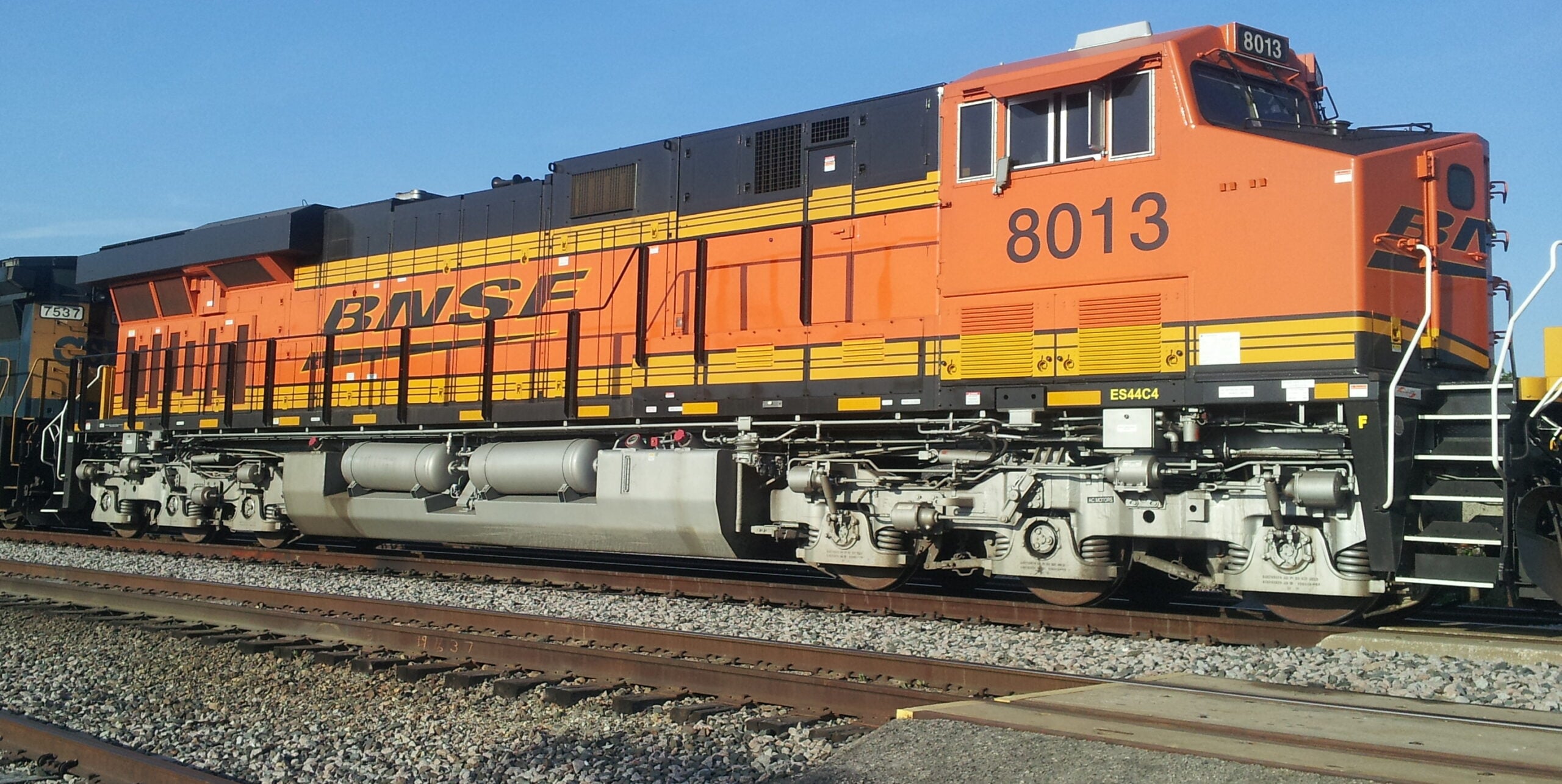
Featured image: BNSF 8013 awaiting re-crew in Dallas, Texas. CSX,LLC/Wikimedia Commons, CC0 1.0.
Government services: For government services, verification, registrations, forms, reporting, or instructions, always navigate to the official agency website directly. Independently verify its address before entering credentials or business information.
Leave a Reply