
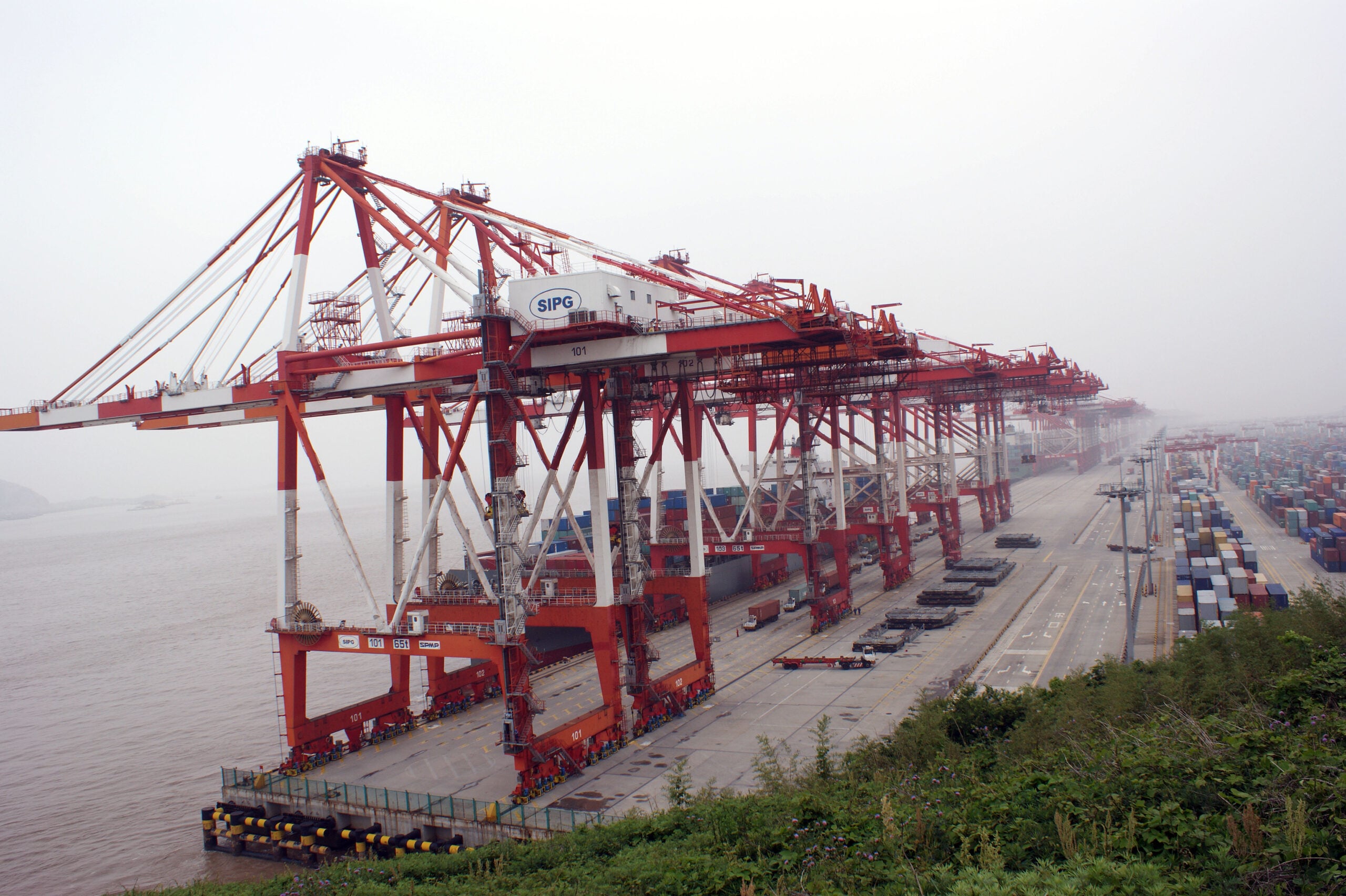
Shanghai and Ningbo-Zhoushan have reopened after Typhoon Saudel, but the operational recovery has deteriorated into a deeper schedule problem. Berth waits now reach 10 to 11 days on some services, port omissions and rotation changes are appearing, and dense yards are limiting the terminals’ ability to absorb delayed vessels.
For U.S. importers, the distinction matters: an open terminal is not the same as a recovered supply chain. Cargo can still miss its planned vessel, lose a transshipment connection or arrive weeks later than the original schedule even while terminal gates are accepting containers.
The global backlog eased, but East China got worse
Linerlytica’s September 1 Market Pulse estimates that 3.92 million TEU, or 11.4% of the global containership fleet, remained tied up at anchorages last week. That is below the previous week’s record 4.31 million TEU and 12.6% of the fleet.
The roughly 9% reduction in stranded global capacity does not mean conditions improved evenly. Linerlytica reports that the latest Shanghai and Ningbo disruptions produced delays exceeding 10 days in the most severe cases. Vessel availability remains tight, charter rates remain firm and August new-vessel deliveries fell to a three-year low of 64,640 TEU.
This is the key decision signal: the global congestion total can decline while the gateways serving a specific trade lane become less reliable. Shippers moving U.S.-bound cargo through the Yangtze River Delta should manage the vessel and terminal actually assigned to their booking—not a global average.
Shanghai and Ningbo remain under operational pressure
SEKO Logistics’ September 1 operational update places Shanghai waits at approximately seven to 10-plus days for mainline transpacific and European services. Yangshan yard density was reported at 85% to 88%, while Waigaoqiao was approximately 78% occupied.
At Ningbo-Zhoushan, waits exceed 10 days in the most severe cases. SEKO reports Meishan International Container Terminal at approximately 95% yard occupancy, Beilun and Daxie yards averaging 92%, and reefer-plug utilization at 94%. Those conditions narrow the margin for early gate-ins, specialized equipment and refrigerated cargo.
Kuehne+Nagel independently reports Shanghai waits of approximately six to 11 days, with late arrivals, shifting berth windows, port omissions and rotation changes already affecting services. It cautions that accumulated queues, off-window arrivals and high yard utilization can prolong disruption for several weeks.
What U.S. importers should do now
- Verify the vessel-specific berth window. A published sailing schedule or open terminal does not confirm that the assigned vessel will berth, load and depart as planned.
- Add at least 10 days to exposed departures. Longer buffers may be necessary for cargo already rolled, omitted, rerouted or dependent on a congested feeder connection.
- Reconfirm terminal cutoffs before dispatch. Match trucking appointments to current gate-in windows to avoid off-dock storage, chassis dwell and detention exposure.
- Protect refrigerated and specialized equipment. Confirm reefer-plug capacity and container availability before loading, particularly at Ningbo.
- Review every downstream connection. Recheck transshipment, rail, barge and final-delivery appointments because a delay at origin can invalidate the rest of the routing plan.
- Escalate truly critical inventory early. Compare replacement sailings, alternate Chinese gateways and air or sea-air options before the original booking is rolled.
What remains uncertain
Delay exposure varies by carrier, terminal and service. The available data do not establish that every Shanghai or Ningbo sailing faces a 10-day wait, and announced schedules can change quickly. The duration of the recovery will depend on weather, pilotage, crane productivity, yard clearance and how carriers resequence off-schedule vessels.
The next decisive evidence will be carrier-specific blank sailings, omitted calls, rolled-booking volumes and whether transpacific spot-rate firmness becomes sustained rather than temporary. Until then, shippers should treat current figures as operational planning ranges—not guaranteed transit times or executable freight quotes.
Photo: Western end of the Yangshan Deepwater Port container terminal, Shanghai. Bruno Corpet/Wikimedia Commons, licensed under CC BY-SA 3.0. The photograph was taken in 2013 and is used as a location image, not as documentation of current congestion.

Leave a Reply