
The most expensive response to a typhoon can be moving the wrong freight first. A shipment with inventory cover may absorb a delay; a low-cost component needed to keep a production line running may justify an expensive recovery move. The storm creates the disruption. The shipper’s allocation decisions determine much of the financial damage.
Typhoon Champi has brought a fresh operational test to East Asia just as logistics providers were reporting recovery from earlier disruption. In its October 23 advisory, SEKO Logistics described weather-related interruptions across Taiwan and the surrounding region, with air-cargo, berthing and ground-transport consequences. Its Taiwan office was closed October 23 and is scheduled to remain closed for the October 26 holiday, resuming normal operations October 27.
Those dates are a warning to verify the complete shipment chain, not a universal four-day shutdown notice. An office closure, a customs-service interruption, a terminal restriction and a cancelled flight are different events. A shipment can clear one bottleneck and remain stranded at the next.
This analysis uses the dated operational reports identified below. It does not certify current conditions at any individual terminal, airport or warehouse. Confirm shipment-specific availability before changing a booking.
Separate the storm from the recovery backlog
Maersk’s October 20 network advisory reported improving East China port conditions and declining vessel waits, while cautioning that wider recovery remained incomplete. Kuehne+Nagel’s October 22 update then distinguished Taiwan Strait vessel restrictions from terminal activity: Ningbo and Shanghai terminals, yards, warehouses and trucking were operating at the time of its assessment.
SEKO’s subsequent October 23 report described a deteriorating weather window and intermittent terminal and transport interruptions. These accounts are observations at different times and locations. They should not be combined into an assertion that every East China port is closed—or that an earlier open status remains valid.
For a shipper, reopening is only the first recovery milestone. The questions that follow are whether the nominated vessel will call, whether cargo is accepted before the revised cutoff, whether a feeder connection remains available and whether the destination appointment can still be met. A terminal can reopen before the shipment’s original plan becomes executable.
Rank shipments by the cost of missing the date
Begin with orders whose required-delivery dates fall before the next credible recovery option. For each, identify the specific consequence of being late: a production interruption, a customer penalty, a lost seasonal sale, spoilage, an installation crew waiting or a replenishment gap.
Use the units and days actually exposed. The retail value of an entire container is not automatically the loss caused by a delay. Likewise, total plant revenue is not automatically the cost of a brief component shortage. Operations and finance should agree on the incremental consequence and document the assumptions.
Divide the queue into three working groups. Protect freight with a documented, imminent service failure and no substitute stock. Reassess freight that becomes critical if recovery slips beyond a defined date. Hold freight with sufficient inventory cover or a flexible customer window unless its economics change.
This prevents the loudest internal request from consuming the recovery budget before the most consequential shipment is evaluated.
Compare complete alternatives, not transport labels
“Switch to air” is not a recovery plan unless the cargo can reach an airport, clear the applicable processes, obtain confirmed uplift and complete delivery in time. A different ocean gateway is not an alternative unless receiving capacity, inland transport, documentation and an onward sailing are available.
Ask for an executable plan showing cargo-ready time, pickup capacity, receiving cutoff, departure, connection, clearance and final delivery. Record which events are confirmed and which are estimates. A faster advertised transit time does not recover a shipment that misses the first available departure.
Compare the incremental expense of each option: rebooking, cancellation, extra handling, storage, trucking, brokerage, security and delivery, together with the credible cost of remaining late. Confirm packaging, insurance and handling suitability before changing the mode. Keep weather-related uncertainty separate from the provider’s commercial commitment.
A partial expedite can outperform a whole-container rescue
Consider a hypothetical shipment with a $30,000 incremental airfreight recovery quote. Suppose the shipper estimates that waiting would expose it to $8,000 per day of avoidable disruption for three days: $24,000. On those assumptions, expediting the entire shipment costs more than the identified delay exposure.
Now suppose a $6,000 split-shipment option can deliver the few components needed to keep the operation running while the balance follows by ocean. If that option is confirmed, compatible with the product and sufficient to avoid the interruption, it presents a different business case.
These figures are illustrative, not market quotes or a prediction. Their purpose is to make the decision explicit. Include any residual delay, extra handling and execution risk; do not assume that paying a premium guarantees recovery. Verify that splitting the shipment is operationally and contractually feasible.
Make a handoff check before Monday
The shipper’s control sheet should name the order, cargo location, inventory cover, required-delivery date, latest useful departure and responsible decision-maker. Add the next verified operating window for the warehouse, customs broker, trucker, terminal or airline—and the time of the source confirmation.
For ocean freight, reconcile the actual vessel and voyage, terminal receiving window, feeder or transshipment connection, rollover terms and destination delivery. For air cargo, distinguish a reservation request from confirmed uplift and check the entire connection. For inland transport, confirm the driver, equipment and appointment rather than assuming an open port means an available truck.
Set an explicit escalation time. If the promised departure or receiving window is not confirmed by that time, the named owner should approve the next option or deliberately accept the delay. Record the spending limit and when the exception expires.
What brokers, forwarders and carriers should communicate
Providers can help customers most by distinguishing observed facts, forecasts and unconfirmed options. Identify the affected shipment, the specific failed event, the revised plan and the next update time. A general storm advisory is useful context; it does not answer whether a purchase order will arrive.
Present the recovery premium separately from normal transportation charges. State which costs are fixed, which depend on waiting time, and which could be duplicated if the plan changes again. Where capacity is provisional, identify what must happen before it becomes firm.
Shippers should give providers the information needed to prioritize: product criticality, acceptable partial quantities, alternative stock, customer flexibility and the actual financial consequence of delay. That allows scarce recovery capacity to be allocated against business need.
The decision that matters
Champi’s freight consequences extend beyond a wind forecast or a port reopening notice. The shipment still has to pass through a sequence of available services—and recovery queues can outlast the weather.
Expedite when a verified recovery option protects more value than it costs. Reroute when the complete alternative works. Hold when inventory and delivery flexibility support waiting. Revisit the choice when a documented trigger changes, rather than paying for urgency that the shipment does not require.
Sources and reporting dates
SEKO Logistics, Asia Supply Chain Weather Center, update dated October 23, 2026, 10:00 HKT. Reference address: www.sekologistics.com/hk-en/resources/asia-supply-chain-weather-center-live-port-freight-updates/
Kuehne+Nagel, “Typhoon Champi restrictions squeeze Taiwan Strait traffic, China ports remain operational,” update dated October 22, 2026. Reference address: mykn.kuehne-nagel.com/news/article/super-typhoon-champi-intensifies-as-east-asia
Maersk, “East Asia network recovery: Update 3,” October 20, 2026. Reference address: www.maersk.com.cn/news/articles/2026/10/20/east-asia-network-recovery-update-3
The financial example is original FIR analysis using stated hypothetical assumptions. It is not a reported customer result. Operational advisories describe conditions at their stated assessment times and require shipment-level reconfirmation.
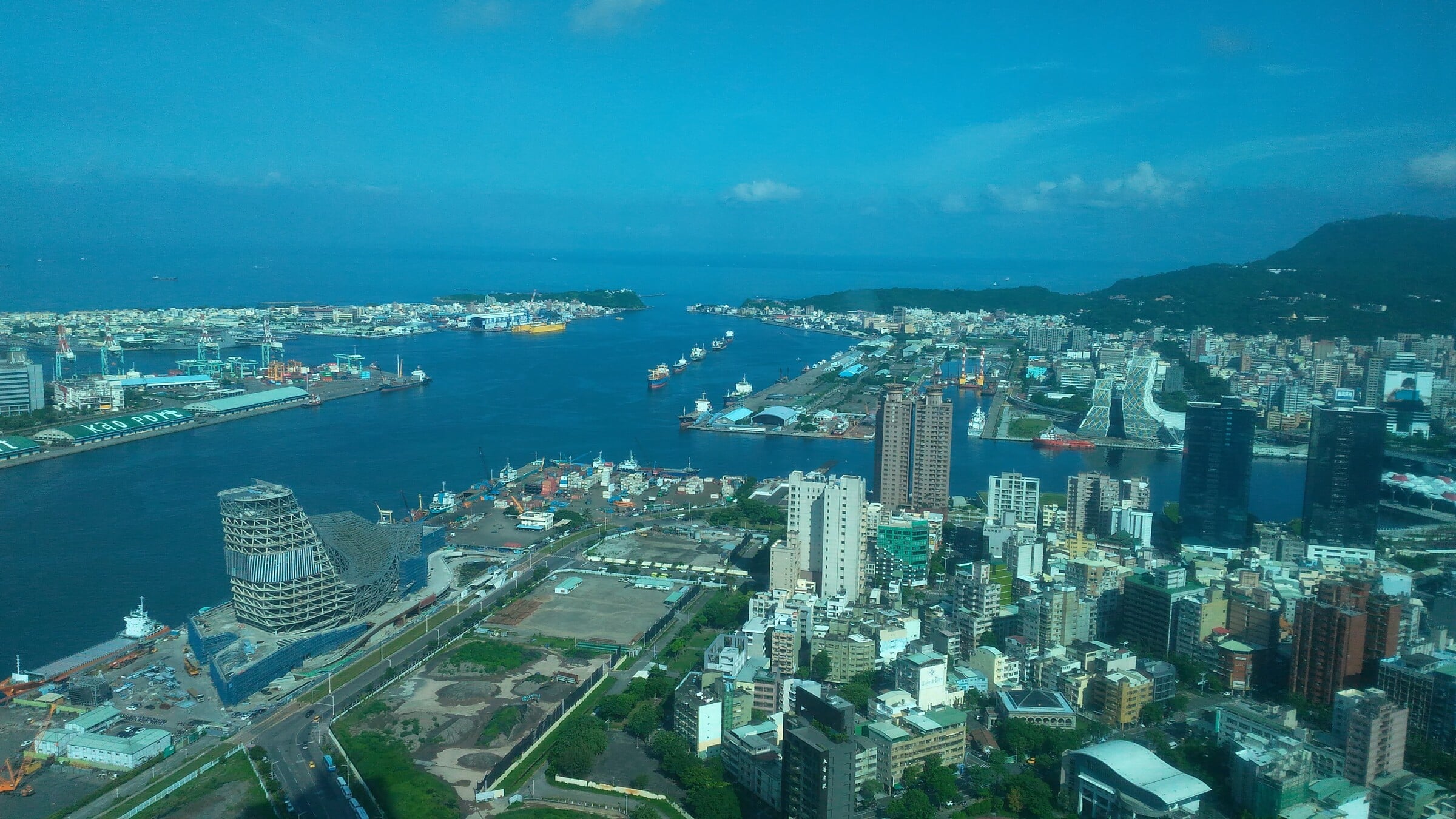
Photo: Port of Kaohsiung, Taiwan, July 25, 2019. Archival photograph by Padai, via Wikimedia Commons; CC BY-SA 4.0. The image depicts the port, not Typhoon Champi. License reference: creativecommons.org/licenses/by-sa/4.0/ . Source reference: commons.wikimedia.org/wiki/File:Aerial_view_of_Kaohsiung_Port_First_Port_and_Container_Center_(Kaohsiung_City_on_the_right).jpg


Leave a Reply