
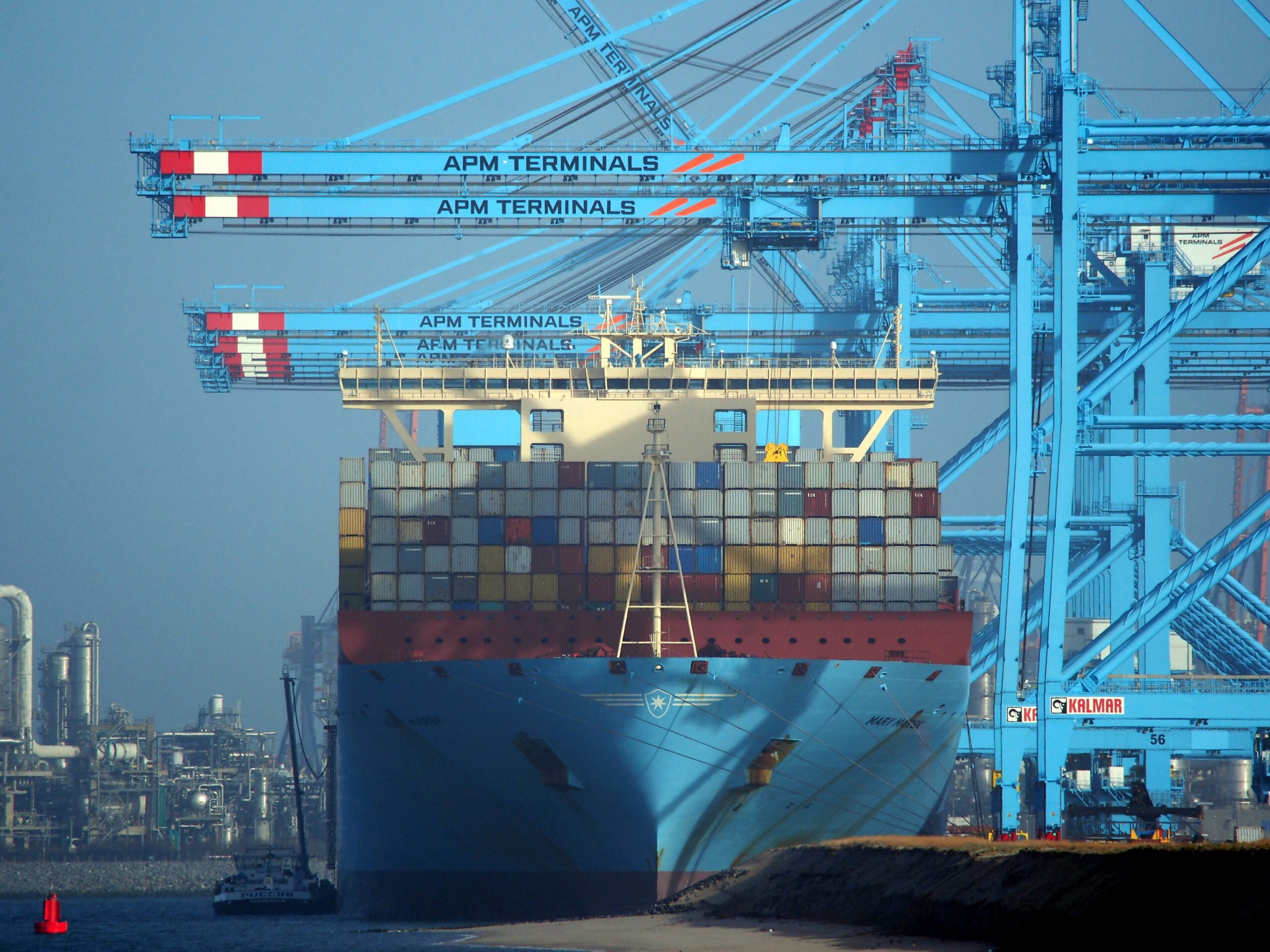
The Mary Mærsk at Rotterdam in 2016. Archival photograph illustrating container-shipping operations; it does not depict a shipment affected by the October 2026 booking-cancellation advisory. Photo: Alf van Beem / Wikimedia Commons (CC0).
A confirmed Maersk ocean booking can now move into an automatic-cancellation window after the vessel was supposed to depart—not just before the sailing.
Effective October 15, Maersk says an eligible shipment may be automatically cancelled when five or more days have passed since the first vessel’s estimated time of departure and the shipment has not “materialised.” For shippers, the immediate consequence is operational: confirmation alone is no longer enough to treat an unresolved booking as protected capacity.
The useful control is a new post-ETD exception clock. Someone must own the booking from the first-vessel ETD through day five, document whether the shipment has materialised and escalate ambiguity before the carrier releases the space.
What Maersk actually changed
Maersk’s October 15 customer advisory says three things clearly:
- the revised timeline applies to eligible bookings;
- automatic cancellation may occur once five days or more have passed since the first vessel’s ETD; and
- the trigger applies when the shipment has not materialised.
Maersk says the change is intended to release unused capacity earlier and improve capacity and transport planning. It also tells customers to monitor their bookings and promptly contact customer service when a shipment is expected to proceed but may be affected.
The advisory does not define “eligible,” explain precisely what evidence makes a shipment “materialised,” or publish exceptions for rolled, cut or carrier-delayed cargo. It also does not say that every unresolved booking will be cancelled exactly on day five.
Those omissions are important. They mean freight buyers should treat the five-day mark as an escalation threshold, not invent a universal rule about which booking, lane, product or delay will qualify.
This is an operating rule—not an announced rate change
Maersk’s separate Spot Booking terms address customer cancellations, failure to deliver cargo and per-container cancellation or no-show fees. Those terms use their own pre-ETD timing and product conditions.
The new advisory does not say it replaces those terms, changes ocean rates or automatically imposes a new fee. An operational cancellation and a financial charge are related questions, but they are not the same question.
Shippers should therefore verify two separate outcomes when a booking is at risk:
- Will Maersk keep or automatically cancel the booking?
- What charges, if any, apply under the specific contract, product and booking confirmation?
Do not assume an auto-cancelled booking is cost-free. Do not assume it automatically creates a new charge either.
FIR analysis: assign an owner to the five days after ETD
Many ocean-control processes focus on documentation and terminal cutoffs before departure, then shift to tracking after the planned sailing. Maersk’s policy creates a gap between those two workflows.
If the first-vessel ETD passes and the booking remains unresolved, the shipment should enter an exception queue with a named owner. FIR recommends the following control sequence:
At the first-vessel ETD
Record the ETD shown in the booking record, cargo and equipment status, terminal status, shipping-instruction status and the last carrier message. Preserve evidence rather than relying on a dashboard label alone.
During days one through four
Reconcile the carrier, terminal, forwarder and supplier records. If they disagree, document the conflict and ask Maersk to confirm whether the shipment is considered materialised and which ETD controls the cancellation clock.
Before day five
Escalate any booking that is expected to proceed but remains unresolved. Identify alternate capacity, pickup and terminal options, and downstream customer or production commitments that would be affected by cancellation.
At day five and beyond
Do not treat silence as confirmation. Verify the booking’s status directly, document the carrier response and decide whether to protect inventory with an alternative routing or sailing.
This four-stage sequence is FIR’s recommended operating control. Maersk has not mandated this workflow.
Three situations require different evidence
Cargo delivered, but systems disagree
A container may have entered a terminal while a booking or visibility feed still appears incomplete. The shipper should retain the gate record and request written reconciliation. A terminal transaction may be persuasive evidence, but the advisory does not state that gate-in alone always satisfies Maersk’s “materialised” standard.
Carrier-controlled disruption
If cargo is rolled, cut or delayed because of a carrier-side event, obtain the carrier’s written status and confirmation that the booking will remain active. Do not assume a carrier-caused event is automatically excluded from the new cancellation logic; the advisory does not publish that exception.
Shipper or supplier readiness failure
If cargo, equipment, documents or instructions are late, decide before day five whether the shipment will proceed. A weak “still planning to ship” note is not a substitute for a confirmed operational path.
The contract-control questions to ask now
Freight buyers do not need to rewrite every ocean contract immediately. They do need consistent answers to a short set of questions:
- Which booking products, origins and destinations are eligible for automatic cancellation?
- What event makes a shipment “materialised” for each booking type?
- Which first-vessel ETD controls when Maersk changes the vessel or schedule?
- How are rolled, cut, terminal-rejected and carrier-delayed shipments handled?
- What notice appears before cancellation, and where is it delivered?
- Can a cancelled booking be restored, or must the customer rebook at then-current availability and price?
- Which existing cancellation, no-show, detention, demurrage or equipment charges can still apply?
The answers should be stored in the shipper’s operating procedure, not left in one employee’s email.
What this means for shippers, forwarders and suppliers
For direct shippers, the new control is a booking-level exception owner. For forwarders and NVOCCs, it is a customer-notification and escalation obligation. For suppliers, it is a clearer deadline for cargo readiness, equipment pickup and documentation.
The policy may help Maersk release space that otherwise sits behind inactive bookings. That can improve network planning. The shipper risk appears when a legitimate but unresolved movement is indistinguishable from unused capacity.
The practical answer is not to assume integration benefits or dispute the carrier’s capacity objective. It is to make the booking’s real operating status visible before the five-day threshold.
What would change this assessment
This analysis should be updated if Maersk publishes a definition of eligible bookings, a formal definition of materialisation, product or geographic exclusions, notice requirements, or explicit treatment of carrier-caused delays.
Until then, the safest conclusion is narrow: the first-vessel ETD now starts a post-departure exception clock for eligible unresolved bookings. A confirmed booking without documented status may not remain protected capacity.
Source ledger / verification notes
- Maersk, “Update to Automatic Booking Cancellation Timeline,” October 15, 2026: https://www.maersk.com/news/articles/2026/10/15/automatic-booking-cancellation-timeline-update
- Maersk, Terms for Spot Booking, accessed October 17, 2026: https://terms.maersk.com/terms-spot-booking
- Maersk, “What is a no-show fee?”, accessed October 17, 2026: https://www.maersk.com/support/faqs/2023/08/25/no-show-fee
Research cutoff: October 17, 2026, 5:25 a.m. America/Chicago.



Leave a Reply