
By Eric Bratton, Founder and Executive Editor, Freight Intel Report
Developing story: Checked October 30, 2026, before release: employers say an extension is being finalized that would move the November 1 deadline to November 4. The reporting reviewed does not establish that the extension is signed, that a strike has begun, or that either port is closed. FIR’s scenarios below are analysis, not predictions.
A possible extension of port watchmen’s contract talks could give shippers more time to protect deliveries—but it should not be treated as a completed labor agreement. The decision is how to use additional time if it becomes available, while retaining a workable fallback if negotiations fail.
The Wall Street Journal reported October 30 that PMA said Thursday it was finalizing a contract extension for approximately 250 port watchmen. The extension would run through Wednesday, November 4, rather than the existing Sunday deadline. This is a reported negotiating development, not confirmation that an extension has taken effect.4
Earlier reporting identified an authorized walkout as early as 5 p.m. Pacific on Sunday, November 1 if no agreement intervened. The watchmen’s contract is separate from the coastwide longshore agreement, which runs through 2028.1
The Pacific Maritime Association, representing employers, warns that other ILWU members may honor picket lines, potentially interrupting vessel, yard and gate work at affected facilities. That is an employer assessment of possible consequences—not evidence that those operations have already stopped.2
The distinction is central to this story. A strike authorization, the start of a walkout, an affected terminal’s operating restriction and a port-wide closure are different events. A shipper should not treat them as interchangeable.
The exposure is in the shipment’s next handoff
FIR’s assessment is that the first planning question should be whether a shipment can clear its next critical handoff before conditions change. A container on the water, a discharged box awaiting release and an export booking approaching cutoff need different responses.
For each exposed shipment, verify the actual terminal, release status, available pickup appointment, trucking coverage and receiving window. An apparently available container is not a recoverable container if customs, carrier release or the destination warehouse prevents collection.
Reporting uses different counts for terminal facilities and locations identified in the dispute. Those counts should not substitute for a current operating notice from the facility handling the shipment.2 Do not assume that an unnamed terminal is immune from indirect disruption, or that every named location will close.
Three outcomes—and a different decision for each
| Possible outcome | Evidence to verify | FIR decision-maker commentary |
|---|---|---|
| A walkout begins | Union notice and terminal-specific gate, yard and vessel instructions. | Activate the priced fallback for orders whose delivery deadline can no longer be met. Rebook receiving appointments and confirm where displaced containers can actually go. |
| Talks are extended or a walkout is deferred | An explicit extension or deferral, its expiry and confirmed operating hours. | Use the additional operating window to collect released critical freight. Retain cancellable alternatives until the next deadline is clear. |
| A settlement averts the stoppage | The agreement’s status, any remaining approval steps and terminal operating confirmation. | Cancel unnecessary contingency spend within its cancellation window. Reconcile appointments and cargo availability; a labor agreement alone does not establish shipment readiness. |
If work stops, diversion must pass an execution test
A different port on a map is not an available recovery service. Before approving a diversion, confirm the carrier’s willingness to change the movement, discharge options, inland capacity, equipment, documentation and the complete delivery date.
Freight already discharged may require a different solution from freight still aboard a vessel. Replacing a critical component by air or sourcing substitute inventory may protect a production deadline more effectively than attempting to redirect an entire ocean shipment. Compare those options against the documented cost of missing the deadline.
Request an all-in recovery quote, including handling, storage, inland transportation and cancellation terms. Identify who can authorize the spend and the last time the alternative remains executable. Do not buy a contingency after it has ceased to protect the customer commitment.
If the deadline moves, use the time deliberately
An extension can reduce immediate risk while leaving the underlying dispute unresolved. Treat it as a defined planning window. Confirm what can move during that window and which commitments extend beyond it.
Prioritize released containers with an imminent stockout, production need or costly missed appointment. Freight with ample inventory cover may not justify premium weekend drayage or off-dock storage. Assign each order a decision deadline rather than applying a blanket instruction to remove every container.
Keep the carrier, broker, warehouse and customer working from the same time-stamped status. Repeatedly shifting a delivery promise without a verified movement milestone can create avoidable labor and appointment costs downstream.
If an agreement is reached, unwind the contingency carefully
A settlement would remove a major source of uncertainty. It would not automatically eliminate unrelated customs holds, rail availability problems or existing appointment constraints.
Confirm whether any tentative agreement has remaining approval steps and whether normal work continues during them. Then release unnecessary backup capacity in the order that minimizes cancellation charges. Keep protection for shipments that remain at risk for reasons independent of the labor dispute.
Before the next confirmed deadline: build one decision record
For each critical shipment, record its terminal, last verified status and timestamp, next movement, required delivery date, available inventory cover, priced alternative, cancellation cutoff and named decision owner.
The useful trigger is specific: if the provider cannot confirm an executable movement by the last time a fallback can protect the deadline, escalate that shipment. The trigger should come from the order’s actual timing and business consequence, not a universal buffer invented for the whole port complex.
We will continue to follow this story as it unfolds. The next developments that would change FIR’s assessment are confirmation that the reported extension has been signed, its exact expiry, a settlement, confirmation of a walkout, and terminal instructions establishing what cargo can move. Until then, preparation should preserve choices while avoiding commitments that depend on an unconfirmed shutdown.
Sources and reporting limits
- FreightWaves: Strike threat by port security workers at Los Angeles–Long Beach, updated October 28, 2026. Reports PMA’s statement and a response from the Port of Los Angeles.
- gCaptain: Strike Threat Looms at Eight Los Angeles, Long Beach Port Terminals, October 27, 2026. Reports the union’s October 23 letter and PMA’s position.
- Long Beach Post: Strike vote by security workers threatens to halt most cargo at Port of Long Beach, October 29, 2026.
- The Wall Street Journal: Employers Near Deal to Delay Strike Threat at Los Angeles-Long Beach Ports, October 30, 2026. Reports PMA’s Thursday statement that an extension was being finalized; does not confirm an executed extension.
FIR reviewed published reporting; it has not independently obtained the bargaining documents or interviewed the parties. Conditional recommendations are FIR analysis. Confirm shipment-specific instructions directly with responsible providers. Status check performed October 30, 2026. No signed extension or direct joint announcement was independently verified.
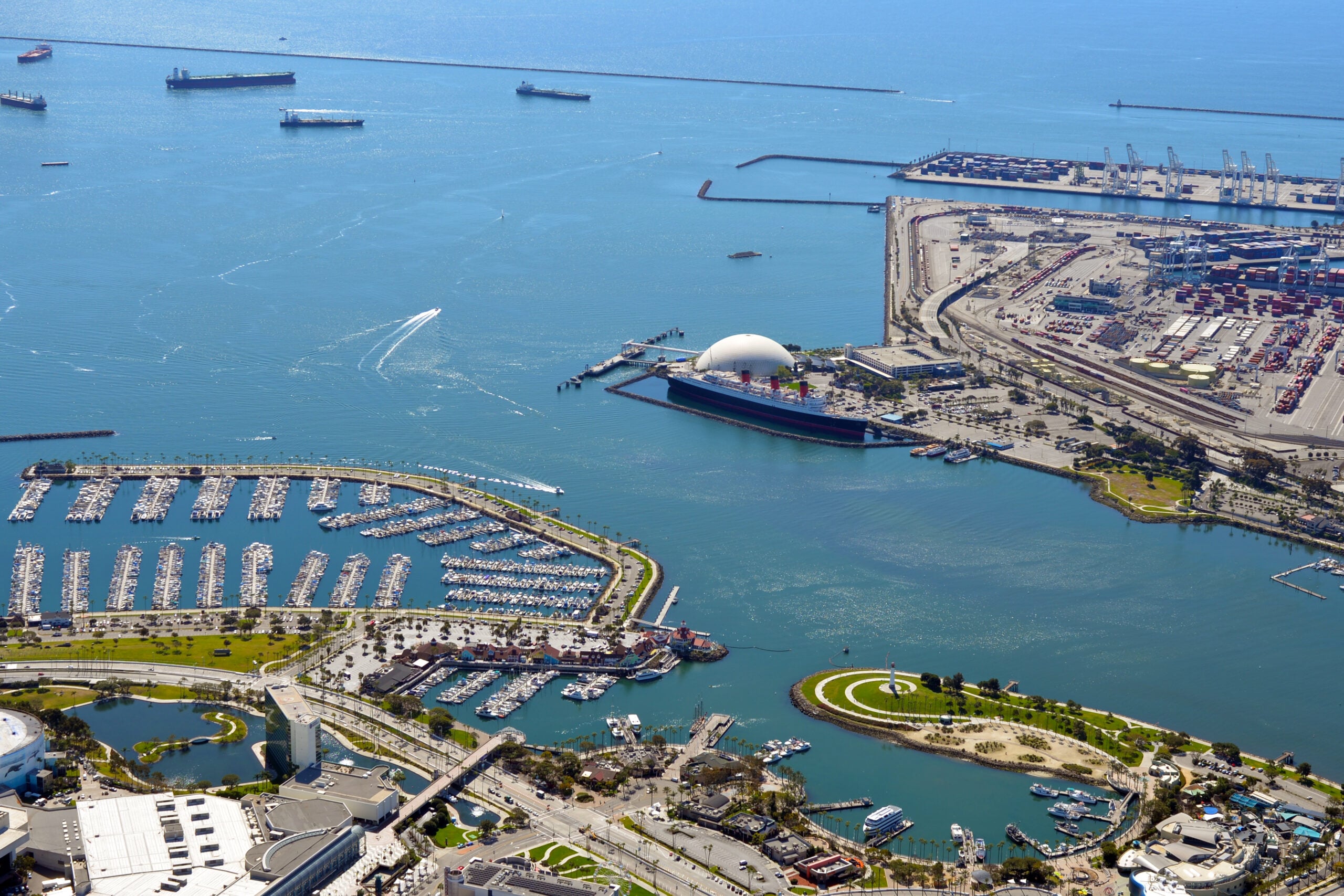
Archival location photograph, March 3, 2020; not documentation of the current labor dispute or operating conditions. Port of Long Beach aerial by Don Ramey Logan.jpg, photograph by Don Ramey Logan, via Wikimedia Commons, CC BY-SA 4.0. Proportionally resized for display.

Leave a Reply