
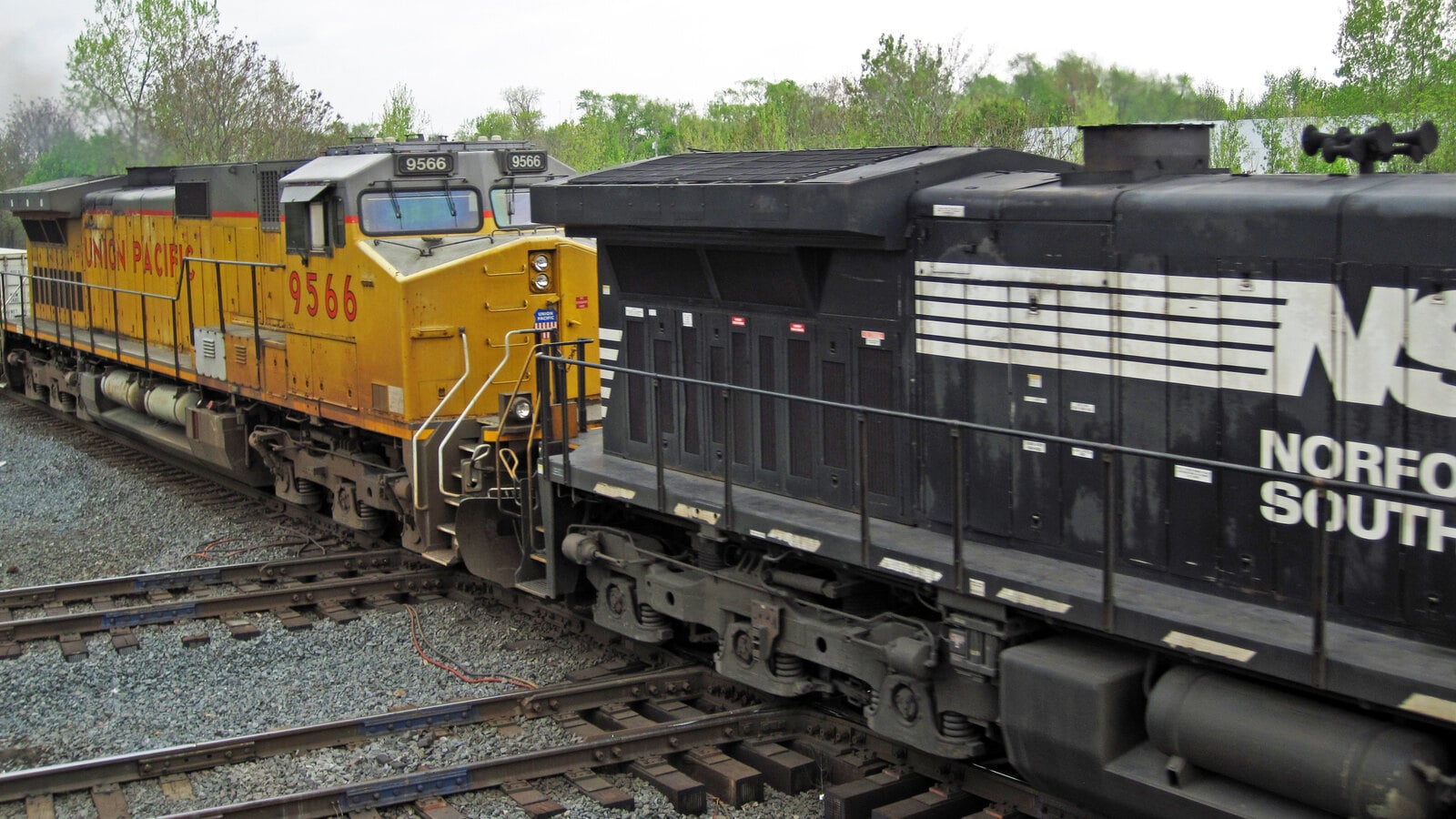
The Surface Transportation Board restarted its Union Pacific–Norfolk Southern review—but also ordered the railroads to restore substantial amounts of filtered data. The November 18 comment deadline is now a commercial-planning deadline for rail customers.
The proposed Union Pacific–Norfolk Southern merger is no longer waiting at the regulatory starting line.
On August 18, the Surface Transportation Board removed the proceeding from abeyance and established a formal review schedule for the proposed $85 billion transaction. If approved, the combination would create the first coast-to-coast U.S. freight railroad—approximately 50,000 route miles across 43 states.
But the most consequential part of the decision for shippers was not simply that the review restarted.
The Board also ordered Union Pacific and Norfolk Southern to resubmit workpapers containing unfiltered data after finding that substantial portions of certain diversion analyses had been excluded from the presentation layer. In one set of projections, the filtering appeared to remove at least:
- 31% of merchandise and bulk locations;
- 59% of intermodal locations; and
- 30% of automotive locations.
The STB emphasized that restarting the proceeding does not reflect a judgment on whether the merger should be approved. But requiring the complete datasets underscores how much remains unresolved about competition, service, gateways and shipper access.
For rail customers, the proceeding has entered its most important phase.
The merger case is moving—but the evidentiary record is still developing
The revised application was accepted for consideration on May 28, but the STB paused the proceeding while requesting additional information.
The Board asked the railroads to address:
- claimed competitive benefits;
- post-merger access for facilities currently served by two or three Class I railroads;
- traffic-diversion and public-benefit projections;
- the proposed Service Assurance Plan;
- terminal and gateway issues involving St. Louis and Kansas City;
- projected market shares;
- the possibility of additional downstream rail mergers; and
- effects on passenger-rail operations.
Union Pacific and Norfolk Southern supplied additional material in July, allowing the formal review to resume. The STB nevertheless concluded that the underlying workpapers must include all data—not only the locations or traffic flows selected for presentation.
The unfiltered workpapers are due August 28.
That date matters because the restored data could change how competitors, customers, regulators and communities evaluate the proposed transaction. The missing locations may ultimately confirm the applicants’ conclusions, undermine them or produce a more complicated lane-by-lane result. The current decision does not answer that question.
The applicants have added new customer protections
Union Pacific and Norfolk Southern made four additional commitments in their July submission:
- Expanded committed-gateway pricing. The proposed program would include bulk unit-train traffic and certain shippers at BNSF- and CSX-served origins and destinations.
- Targeted access for sole-served facilities. Certain shippers could become eligible for reciprocal switching if service falls below specified performance standards.
- Protection for 2-to-1 and 3-to-2 facilities. The applicants proposed conditions intended to preserve existing Class I access where the merger would reduce the number of available railroads.
- Rate dispute resolution. A new alternative-dispute-resolution process could be implemented if the merger’s expected public benefits fail to materialize promptly.
The railroads also reached a contingent agreement with Canadian National addressing competitive access and ownership interests in terminal railroads serving St. Louis, Kansas City and Peoria.
These commitments are commercially important. They are not yet the equivalent of an enforceable, shipper-specific service guarantee.
Transportation buyers should examine how eligibility is defined, which performance metrics trigger relief, how long a service failure must continue and whether the proposed remedy would be operationally practical at each affected facility.
Why “end-to-end” does not eliminate shipper risk
Union Pacific and Norfolk Southern characterize the merger principally as an end-to-end combination. The networks overlap directly in relatively few locations, and the applicants argue that single-line coast-to-coast service would reduce handoffs, improve reliability and give shippers a stronger rail alternative to trucking.
Those benefits are plausible on some lanes. They should not be assumed systemwide.
A shipper can experience reduced competitive leverage even without two railroads operating parallel tracks into the same plant. Competition can depend on:
- interchange gateways;
- terminal access;
- reciprocal switching;
- short-line connections;
- intermodal terminal options;
- commercially usable routing alternatives; and
- the ability to shift volume among carriers during contract negotiations.
A through route that removes an interchange may improve transit time. The same network combination could also reduce the number of commercially independent routing options available to another shipper.
The correct analysis is facility- and lane-specific.
Rail demand makes the proceeding more consequential
The review is advancing while rail volumes remain positive.
For the week ending August 15, U.S. rail traffic increased 2.4% from the same week in 2025. Intermodal volume rose 2.7%, while year-to-date intermodal traffic was 3.8% higher.
That growth does not prove the merger is necessary or harmful. It does mean the decision will be evaluated against an active freight network in which intermodal capacity, terminal performance and reliable inland service matter to a growing volume of cargo.
A major integration problem would therefore carry real supply-chain consequences. Conversely, measurable improvements in single-line service could provide meaningful value if the promised benefits are delivered and competitive access remains viable.
What shippers should do before November 18
1. Map facility-level competitive exposure
Identify every origin, destination, plant, warehouse and terminal currently dependent on Union Pacific, Norfolk Southern or a connecting railroad.
Classify each location as:
- sole-served;
- 2-to-1 exposure;
- 3-to-2 exposure;
- gateway-dependent;
- short-line dependent; or
- supported by a practical truck or intermodal alternative.
2. Establish a service baseline
Document current performance before any integration occurs:
- door-to-door transit time;
- transit-time variability;
- interchange dwell;
- missed switches and pickups;
- terminal dwell;
- equipment availability;
- demurrage and accessorial expense;
- claims frequency; and
- shipment visibility.
A remedy tied to service deterioration is useful only if the pre-merger baseline can be demonstrated.
3. Audit gateways and routing alternatives
Determine which gateways provide real commercial leverage rather than merely appearing in a routing guide.
Record current rates, interchange performance, minimum-volume commitments and any operational restrictions that could make an alternative route impractical.
4. Translate concerns into measurable conditions
A filing that merely states that the merger may reduce competition is less useful than one connecting a specific facility or lane to a specific remedy.
Potential conditions could address:
- gateway pricing;
- reciprocal-switching eligibility;
- service thresholds;
- data reporting;
- dispute-resolution timing;
- terminal access;
- rate protections; and
- periodic regulatory review.
5. Preserve procurement flexibility
Do not price future bids on the assumption that the merger will be approved, rejected or completed without disruption.
Maintain alternative routings, split awards, trucking contingencies and realistic inventory buffers for merger-sensitive lanes.
6. Coordinate participation now
Notices of intent to participate as a Party of Record are due September 4. Comments, protests, requests for conditions and other opposition evidence are due November 18.
Shippers that may be materially affected should coordinate promptly with qualified rail counsel and relevant trade associations.
The next deadlines
- August 28, 2026: Applicants must submit unfiltered workpapers.
- September 4, 2026: Notices of intent to participate are due.
- November 18, 2026: Comments, protests, requests for conditions and opposition evidence are due.
- December 3, 2026: Preliminary DOJ and USDOT comments are due.
- February 16, 2027: Responses and merger rebuttal are due.
- March 29, 2027: Rebuttals supporting responsive applications are due.
- May 28, 2027: Final briefs are due.
- Public hearing: Date to be determined.
Freight Intel Report assessment
The August 18 decision is neither a regulatory endorsement nor a setback that ends the transaction. It converts the merger from a paused proposal into a live evidentiary proceeding.
The applicants now have an opportunity to prove that a unified transcontinental network can improve service without weakening competition. Shippers have a limited window to test those claims against actual facilities, actual lanes and actual performance data.
The greatest mistake would be waiting until the STB reaches a final decision.
By then, the most important opportunity to shape enforceable conditions may already have passed.
This analysis is for general informational purposes and is not legal advice.
Sources
- Surface Transportation Board: Major Railroad Mergers
- Reuters: U.S. transport regulator resumes review
- Association of American Railroads: Weekly rail traffic
Featured photograph: Norfolk Southern 9397 and Union Pacific 9566 leading a freight train in Marion, Ohio. Photo: James St. John via Wikimedia Commons, CC BY 2.0.
Government services: For government services, verification, registrations, forms, reporting, or instructions, always navigate to the official agency website directly. Independently verify its address before entering credentials or business information.

_2_(28354933637).jpg)
Leave a Reply