
Published August 8, 2026
Update — August 9: Typhoon Dolphin made landfall near Yuhuan, Zhejiang, at about 5:30 p.m. China time with maximum sustained winds of 42 meters per second (151 km/h). More than one million people were evacuated across eastern China. Shanghai canceled more than 1,300 Sunday flights across Pudong and Hongqiao; the public count covers total flights and does not identify cargo-only cancellations. Reuters confirmed the landfall, citing Chinese meteorological authorities, and the Associated Press independently corroborated the landfall intensity and Shanghai flight disruption.
Update — August 10: Dolphin weakened after landfall, but the freight risk shifted inland as torrential rain flooded Shanghai streets and disrupted road access. Reuters reported knee-deep flooding in parts of Jiading and Qingpu, suspended nonessential operations in Jinshan, and nearly 1,000 additional flight cancellations across Shanghai’s airports. The public total again covers all flights, not cargo-only services. The Guardian independently reported that Shanghai recorded its heaviest 24-hour rainfall in more than 150 years and evacuated 215,600 people. These conditions increase the risk of delayed drayage, warehouse access and terminal recovery, but no authoritative terminal-by-terminal reopening sequence or carrier omission count has yet been published.
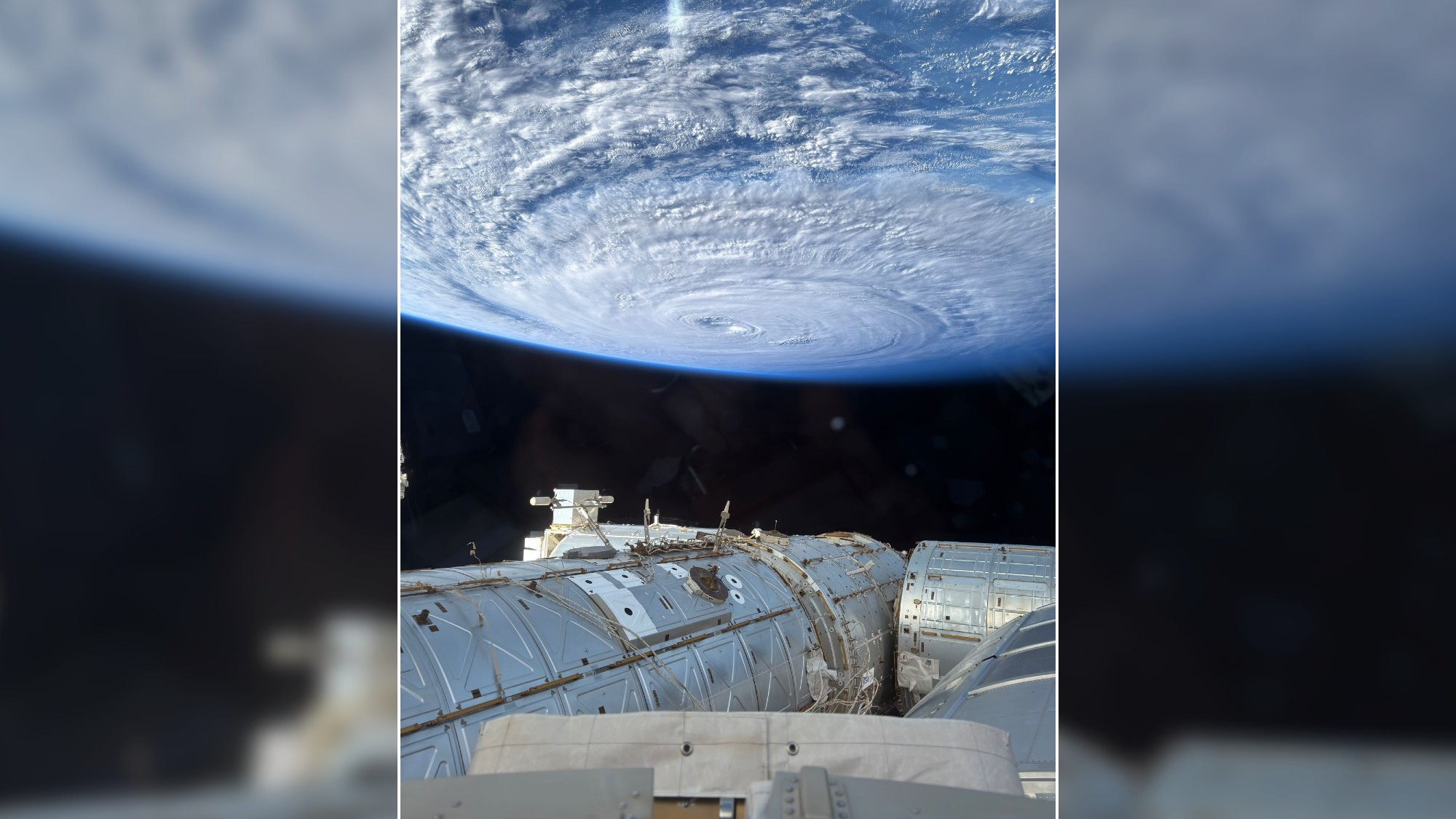
Featured image: A photograph captured from the International Space Station by NASA astronaut Anil Menon on Aug. 2, 2026, believed to show Super Typhoon Dolphin over the western Pacific. Credit: NASA/Anil Menon.
Typhoon Dolphin has halted port operations across Zhejiang and cleared vessels from Shanghai’s Yangshan container hub, disrupting two of the most important gateways in U.S.–China trade just as retailers and manufacturers move late-summer and holiday cargo.
The closure is precautionary, and the duration remains unknown. But this storm arrived against an already-congested East China port system, increasing the risk that even a short shutdown produces missed cutoffs, rolled cargo and delayed transpacific arrivals.
The verified situation
- China classified Dolphin as an orange-level typhoon and raised its emergency response to Level III.
- Zhejiang raised its coastal response to the highest level and halted port operations.
- Shanghai’s Yangshan port was cleared of vessels by late Friday, August 7.
- Ningbo authorities ordered roughly 800 vessels into shelter, while Ningbo Lishe International Airport said it would suspend all Sunday flights.
- Dolphin made landfall near Yuhuan, Zhejiang, at about 5:30 p.m. on August 9 with maximum sustained winds of 42 meters per second (151 km/h).
Reuters reported, citing Chinese meteorological authorities, that parts of central and eastern Zhejiang could receive 250–500 millimeters of rain as Dolphin moves inland. Authorities warned that the Qiantang, Yong, Jiao and Shuiyang rivers could exceed warning levels. The Associated Press independently confirmed landfall winds of about 151 km/h, maritime suspensions and the Shanghai flight disruption.
Why this shutdown carries more freight risk
The operational issue is not simply the number of hours terminals remain closed. Shanghai and Ningbo were already managing berth and yard pressure before Dolphin approached.
In its July 31 port update, Kuehne+Nagel reported a seven-day average vessel wait of 2.57 days at Shanghai and 1.51 days at Ningbo. One Yangshan facility was experiencing waits of about six days, while Ningbo’s MSICT terminal faced roughly two-day waits and elevated yard density.
That means the reopening will matter as much as the landfall. Vessel arrivals can bunch after safety restrictions are lifted. Crane and gate productivity may return in stages, inland trucking appointments can be displaced, and carriers may omit ports or rearrange rotations to recover schedules.
What U.S. importers should verify now
- Terminal status: Confirm the exact Shanghai or Ningbo terminal, not merely the port name. Reopening times can differ by facility.
- Container cutoff: Recheck gate-in deadlines, empty-return instructions and verified gross mass cutoffs for exports.
- Vessel rotation: Ask whether the booked vessel will call as scheduled, omit the port or transfer cargo to a later sailing.
- Inland movement: Confirm drayage appointments, warehouse availability and any restrictions affecting dangerous goods, reefers or time-sensitive cargo.
- U.S. arrival planning: Build contingency time into production, distribution-center and retail delivery schedules until carriers publish revised estimated arrivals.
What remains unknown
No reliable public count yet shows how many transpacific sailings will be delayed or canceled. Terminal-by-terminal reopening times, channel inspections, yard conditions and the size of the post-storm vessel queue also remain unresolved. There is no verified evidence yet that Dolphin has changed spot rates.
Freight Intel Report assessment
This is a meaningful operational disruption, not yet proof of a prolonged capacity shock. Inland flood impacts are now confirmed in Shanghai. The pivotal remaining signals are carrier port-omission notices, terminal reopening sequences, vessel waiting times and revised U.S. arrival schedules.
Shippers should verify cargo status now rather than assume a blanket delay. Freight Intel Report will continue tracking carrier advisories and measurable congestion as East China ports begin recovery.
Leave a Reply